Shockwave Therapy: What Happens Before, During and After?
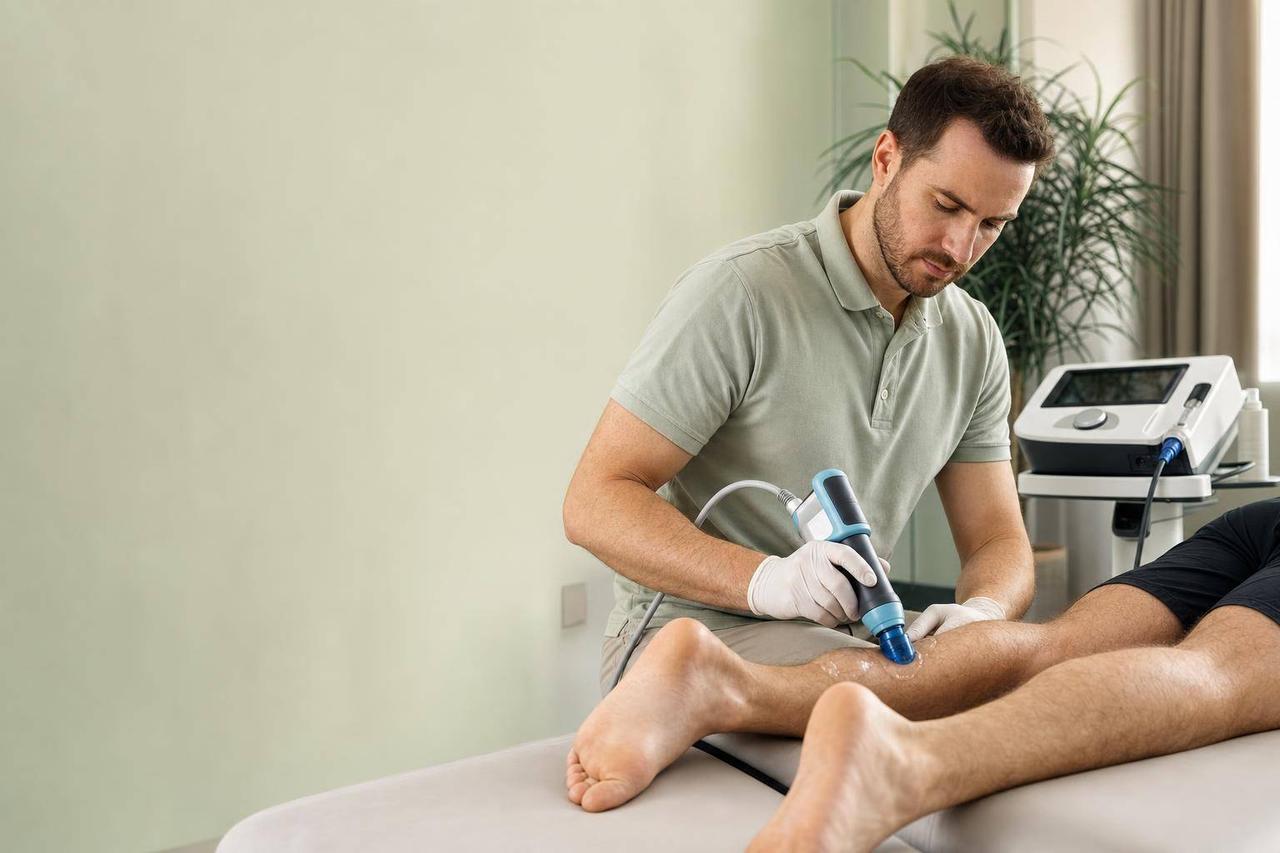
If you have been recommended acoustic wave treatment for a chronic tendon or soft tissue issue, you likely have questions about what happens during a shockwave therapy session. Understanding the steps of the procedure, the sensations you might feel, and the immediate recovery process can help you feel more comfortable and prepared. Please note that online health information cannot replace a professional medical diagnosis; an individualized assessment is always necessary to determine if this therapy is appropriate for your specific condition.
Before the Session: Assessment and Preparation
Before any active treatment begins, the clinician focuses on accurate positioning and targeting. When you arrive for your appointment, you will be asked to sit or lie down in a comfortable position that allows clear access to the injured region. Because this therapy is often used for areas like the heel, tendon, or the shoulder, your position will depend entirely on the specific location of your discomfort.
Accurate targeting is a critical step before the device is used. The clinician will confirm the exact treatment site through a physical examination. In many clinical services, they may also review or use imaging, such as an ultrasound or an X-ray, to precisely localize the soft tissue lesion. This ensures that the acoustic waves are directed exactly where they are needed most. At Physio Cure Dubai, our Medical Director, Dr. Mina Gamil, whose expertise includes orthopedic rehabilitation and sports rehabilitation, emphasizes the importance of a thorough clinical examination to guide targeted physical therapy interventions.
What a Shockwave Therapy Session Looks Like
Once you are positioned comfortably and the treatment area is identified, the active phase of your session begins. The entire appointment is typically scheduled for a 15 to 30-minute time slot, which includes this initial setup, the active treatment, and post-session care.
The first step in the physical application is the use of a conductive medium. The clinician will spread a cool, jelly-like ultrasound-style gel directly over the skin of the targeted area. This gel serves two important purposes: it helps reduce friction to minimize surface discomfort, and it ensures the efficient transmission of the acoustic sound waves from the device into your deeper tissues.
Next, the therapist places a specialized handheld probe against your skin over the gel. When the device is activated, you will hear repetitive clicking or tapping sounds. Many people compare this noise to a rubber band snapping or a mallet tapping. While the sound is distinct, it is a normal part of the machine’s operation as it generates the acoustic pulses.
How Shockwave Therapy Works
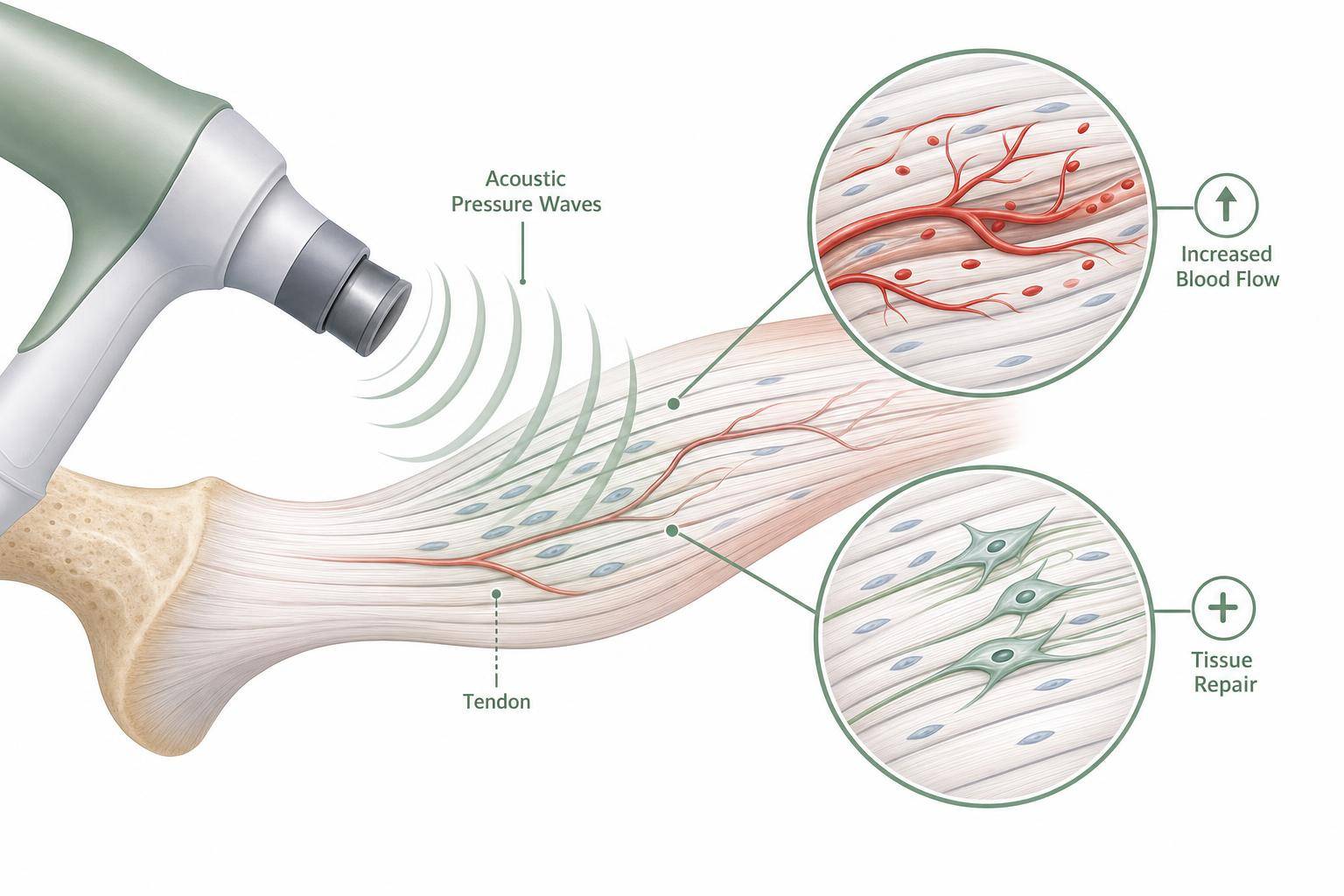
During the active phase, the handheld device delivers rapid acoustic pulses, or high-energy sound waves, directly into the tissue. For a typical musculoskeletal treatment, the machine will deliver between 1,500 and 3,000 pulses over the targeted area. The clinician adjusts the depth and specific settings based on your individual diagnosis.
The actual delivery of these pulses is relatively brief. The active pulse delivery to a single region usually lasts only about five to ten minutes. Some services even note that smaller areas may only require two to seven minutes of continuous application.
A common concern is whether the procedure is painful. Authoritative medical sources are consistent: while most patients experience mild to moderate, short-lived discomfort, it is generally not considered severely painful. It is important to note that the sensation is not an electric shock, nor is it typically described as a sharp or stabbing pain. Instead, patients commonly describe feeling a rapid tapping, pulsating, tingling, or rhythmic pressure on the skin.
Deeper in the tissues, especially directly over the most damaged spots, it may feel like a mild pressure or a dull ache, sometimes compared to receiving a deep tissue massage on a highly tender spot. Pain scales can vary from person to person. Some clinical reviews suggest patients rate the discomfort between 3 to 5 out of 10, or 4 to 7 out of 10, with variations depending on whether radial or focused waves are used. Current clinical guidance stresses that there is no “no pain, no gain” requirement; the therapy is always adjusted to a level that is tolerable for you.
Conditions Shockwave Treats
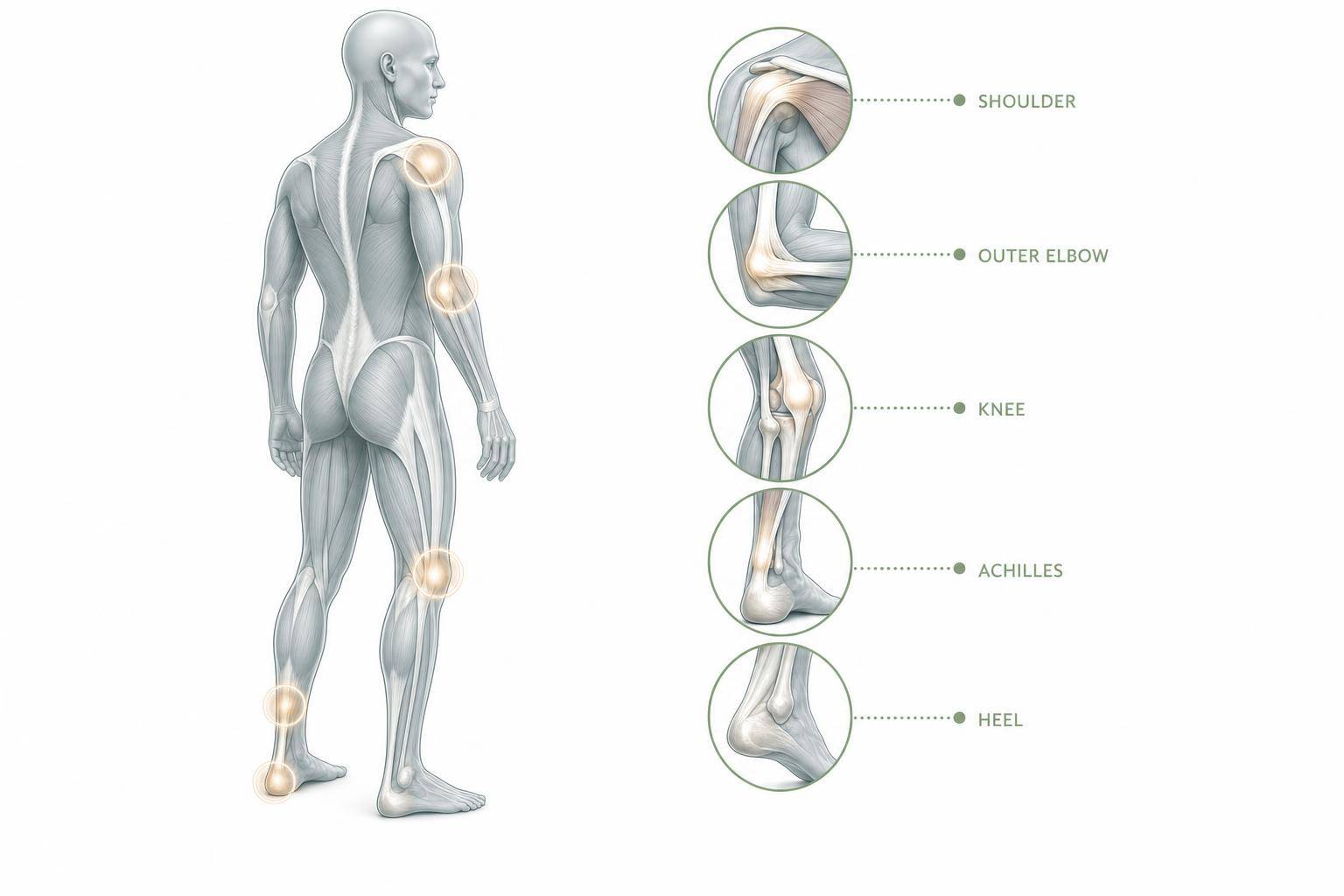
Shockwave therapy is commonly discussed in the context of orthopedic care for chronic tendon and soft tissue problems. The acoustic waves are highly focused and directed into specific regions of the body where these chronic issues persist.
Understanding the Target Tissues
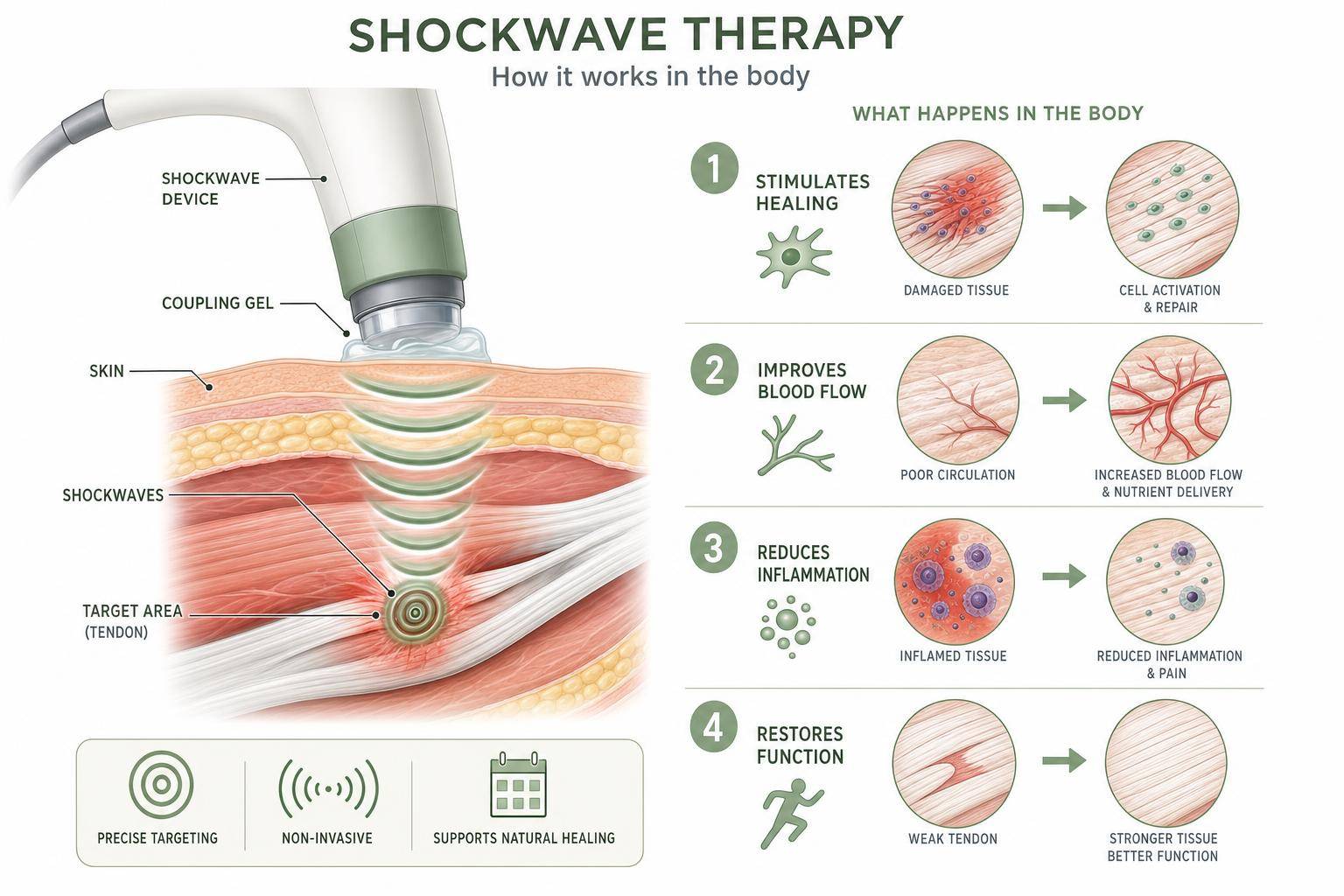
When treating these areas, the therapy targets the injured region to stimulate a local response. For instance, individuals seeking plantar fasciitis treatment for heel pain, Achilles tendinitis treatment, or tennis elbow treatment often have localized lesions or damaged spots in their soft tissues. The thousands of rapid acoustic pulses delivered during a session induce controlled microtrauma in the tissue, which is part of the planned process to encourage a healing response over time.
After the Session: Recovery and What to Expect
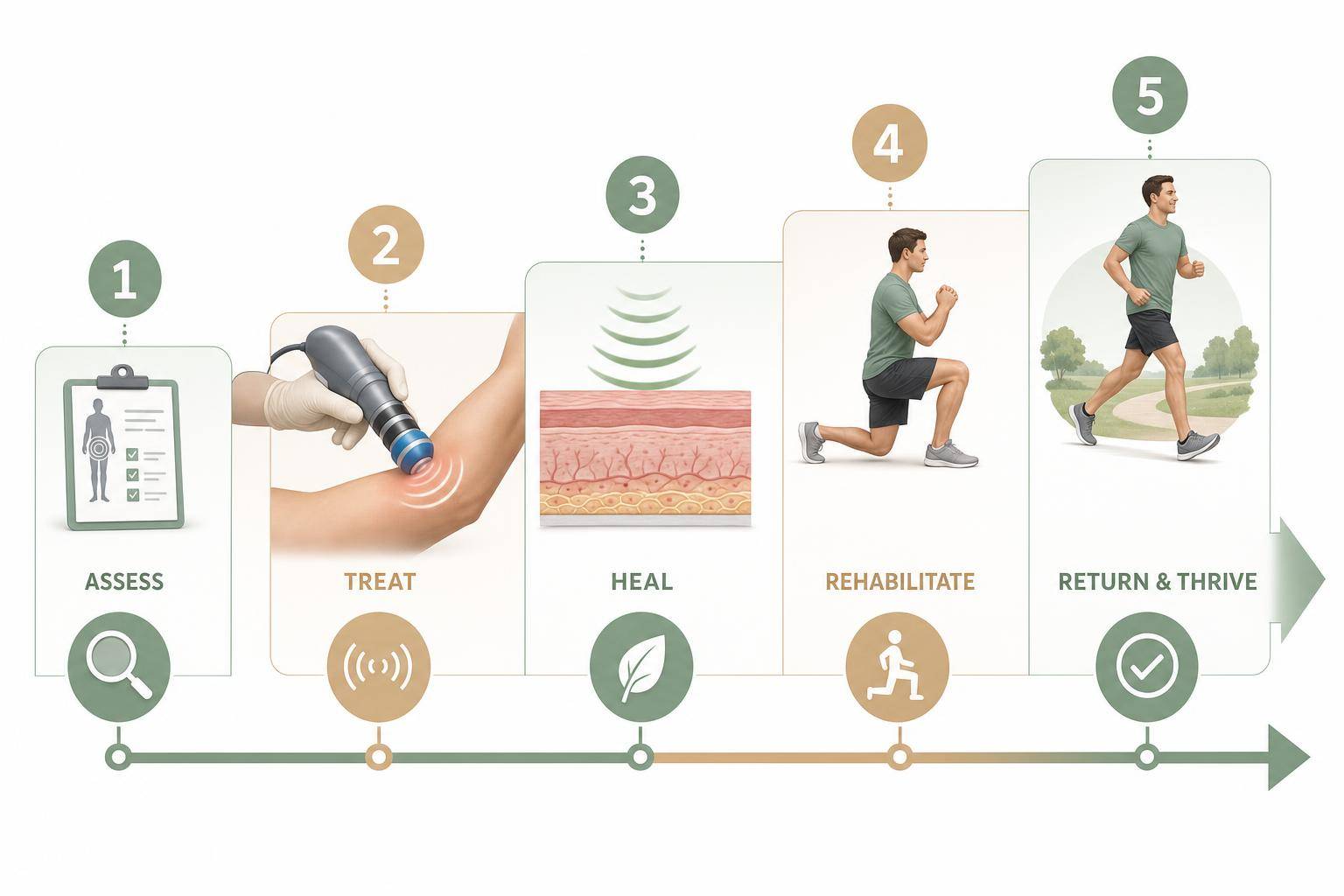
Immediately after the device is turned off and the pulses stop, any discomfort you felt during the session typically drops off quickly. The clinician will wipe off the ultrasound gel and check your skin. It is completely normal to experience mild redness, warmth, or slight swelling in the treated area.
Most patients find that they can return to their normal or light daily activities straight away. However, it is common to notice some mild soreness, warmth, or increased sensitivity in the area that was treated. This post-session discomfort is generally self-limited.
Finally, it is essential to understand that this therapy is not a single treatment. Current clinical and hospital guidance consistently describes it as a short course of repeated sessions. A typical treatment plan involves multiple sessions—often between three to six sessions in total. These are usually scheduled once per week, or at intervals of several days. This spacing allows your body the necessary time to progress through the expected response. After completing the initial block of sessions, your clinician will reassess your condition to evaluate your functional progress.
Related care at Physio Cure Dubai
Doctor-led services for what you have just read about.
Frequently Asked Questions
What happens during a shockwave therapy session?
Your clinician first positions you comfortably and identifies the exact treatment area. A cool gel is applied to the skin, then a handheld probe delivers rapid acoustic pulses while the therapist monitors your comfort and adjusts the settings as needed.
Does shockwave therapy feel painful?
Most people describe the feeling as rapid tapping, pulsing, tingling, or firm rhythmic pressure. It may feel more tender over the most sensitive tissue, but it should stay within a tolerable range, and you can ask your therapist to adjust the intensity.
How long does a shockwave therapy appointment usually take?
A typical appointment is scheduled for about 15 to 30 minutes, including setup, treatment, and brief aftercare. The active delivery of pulses to one area usually lasts around 5 to 10 minutes.
What should I expect after a shockwave therapy session?
Mild redness, warmth, swelling, soreness, or sensitivity can occur in the treated area. These effects are usually short-lived and often settle within 24 to 48 hours, but you should contact your physiotherapist if symptoms feel unusual or persist.
How many shockwave therapy sessions might be needed?
Shockwave therapy is usually planned as a short course rather than a single visit. Many treatment plans involve around 3 to 6 sessions, often spaced weekly or several days apart, followed by reassessment of your function and symptoms.
What conditions is shockwave therapy commonly used for?
It is commonly used in orthopedic and physiotherapy care for chronic tendon and soft tissue concerns. Examples include plantar fasciitis, Achilles tendinitis, and tennis elbow, when a clinician determines that the treatment is appropriate for the individual case.
Can I return to normal activities after shockwave therapy?
Many patients can return to normal or light daily activities soon after the session. Your physiotherapist may advise you to avoid heavy loading or intense exercise for a short period, depending on the treated area and your overall treatment plan.
When should I see a physiotherapist about shockwave therapy?
You should see a physiotherapist if tendon, heel, elbow, shoulder, or soft tissue pain is persistent, recurrent, or limiting your daily activities. A clinical assessment helps confirm the likely source of pain and whether shockwave therapy, exercise rehabilitation, or another approach is suitable.
Related Articles

5 Reasons Plantar Fasciitis Hurts More in the Morning
Learn why plantar fasciitis hurts in the morning, what causes first-step heel pain, and simple ways to ease stiffness before your first steps each morning.
7 min read

5 Checks Before Starting Knee Osteoarthritis Exercises
Learn what a physiotherapist assesses before knee osteoarthritis exercises, including symptoms, swelling, strength, function, and safety checks first.
9 min read

9 Questions to Ask Before Choosing a Physiotherapy Clinic in Dubai
Nine practical questions to ask before choosing a physiotherapy clinic in Dubai, covering consent, shared decisions, roles, risks, and support.
7 min read