Shoulder Impingement vs Rotator Cuff Problems: Symptoms, Overlap and When Weakness Needs Assessment

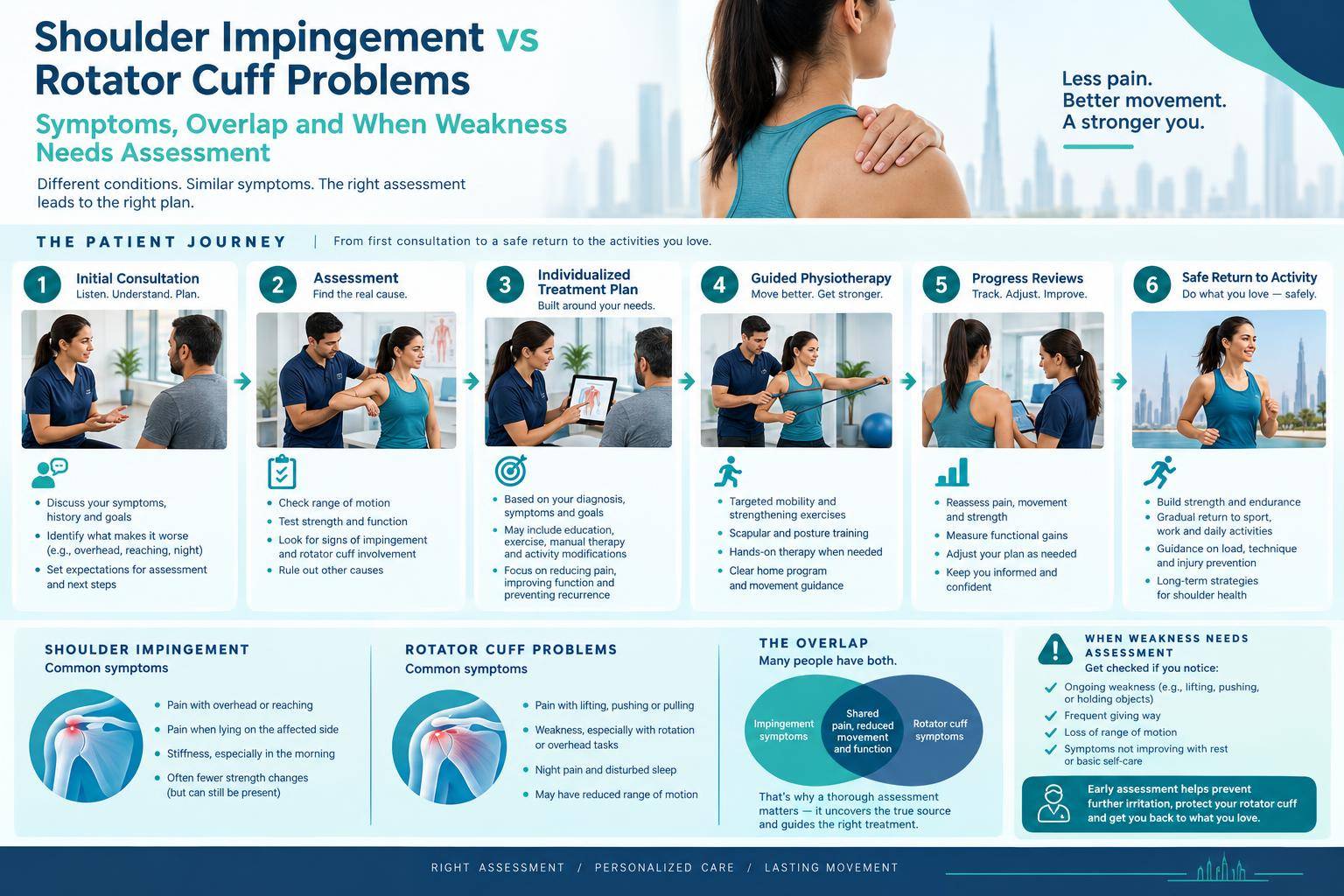
Shoulder impingement and rotator cuff problems often feel alike. Both can hurt when you lift your arm. Pain may also disturb your sleep. So what is the difference? “Impingement” describes possible contact around the cuff during movement. Rotator cuff problems affect the muscles or tendons themselves. The two can overlap, and symptoms alone cannot tell them apart.[1][2]
Two related shoulder problems
1. What do the terms mean?
The rotator cuff is a group of four muscles and their tendons. Tendons are strong bands that join muscle to bone. The cuff helps move and support your shoulder. Cuff problems include tendon irritation, longer-term tendon changes and tears. These are different problems, even though their symptoms may overlap.[3][1]
The acromion is a bony part at the top of your shoulder. “Impingement” describes contact near it as the arm moves. Both contact around the cuff and changes within its tendons may play a part. Neither idea proves what caused one person’s pain. One clinical guide groups impingement with rotator cuff-related shoulder pain.[1][2]
Cuff pain may start after an injury. It may also build up with repeated shoulder use. Tell your clinician about a fall, sport, work or any change in activity. These details give context, but do not confirm a diagnosis. You can also read about shoulder pain treatment.[1]
2. Which symptoms can overlap?
People with cuff-related pain may feel it near the outer shoulder or upper arm. Reaching overhead may hurt. Pain at night can also occur. Some people have a painful arc. This means pain during one part of lifting the arm. It is a clue, not proof of impingement or a tear.[1][2][4]
Weakness also needs more detail. Does the arm feel hard to lift because it hurts? Or have you lost strength you had before? Did that change happen just after an injury? An assessor can use those answers alongside a movement and strength check. Pain alone does not show that a tendon has torn. For more context, see rotator cuff tear physiotherapy.[3][2]
How an assessment looks for clues
3. What else can resemble shoulder pain?
Pain from the neck can feel like shoulder pain. Neck and shoulder problems can also occur together. Shoulder pain is often dull or aching. Pain from a neck nerve may feel electric, burning or shooting. It may run past the elbow. These patterns are clues, not firm rules.[4]
A clinician may ask where the pain starts and how far it travels. They may also ask whether neck movement changes it. This helps them look beyond the shoulder alone. If you have noticed a change in feeling or arm strength, say so during the assessment.[4]
Movement gives another clue. Active movement means moving your arm yourself. Passive movement means someone else moves your relaxed arm. With a cuff problem, active movement may be hard while passive movement stays fairly free. If both are limited, a clinician may consider another cause, such as frozen shoulder. That condition can make the joint stiff in many directions.[3][1][2]
4. When does weakness need urgent attention?
A sudden, major loss of strength or function after injury can raise concern about a new cuff tear. Seek prompt medical assessment if this happens, especially if you cannot lift the arm. Do not rely on routine exercises while you wait to see whether strength returns. The injury and your movement need a proper check.[2]
The cited shoulder guide calls for urgent specialist referral when a new cuff tear is suspected with marked weakness. Its pathway first rules out a fracture or dislocation. The guide’s referral timing belongs to that local pathway. It is not a reason to delay an initial assessment.[2]
5. What happens during an assessment?
A clinician may ask how pain began and what you can do now. They may ask about past shoulder or neck problems. They can check where it hurts and compare both shoulders. They may then check active movement, passive movement and strength. If neck pain seems involved, they may examine the neck and nerves too.[3][1][4]
Some movement tests put more load on parts of the cuff. A painful arc is one example. Other tests check how you hold or turn the arm. No one test gives the full answer. The clinician weighs each result against your story and other findings. Tests or scans may be considered if they could help clarify the problem or guide care. Read more about orthopedic physiotherapy.[3][2]
6. What might rebuilding strength involve?

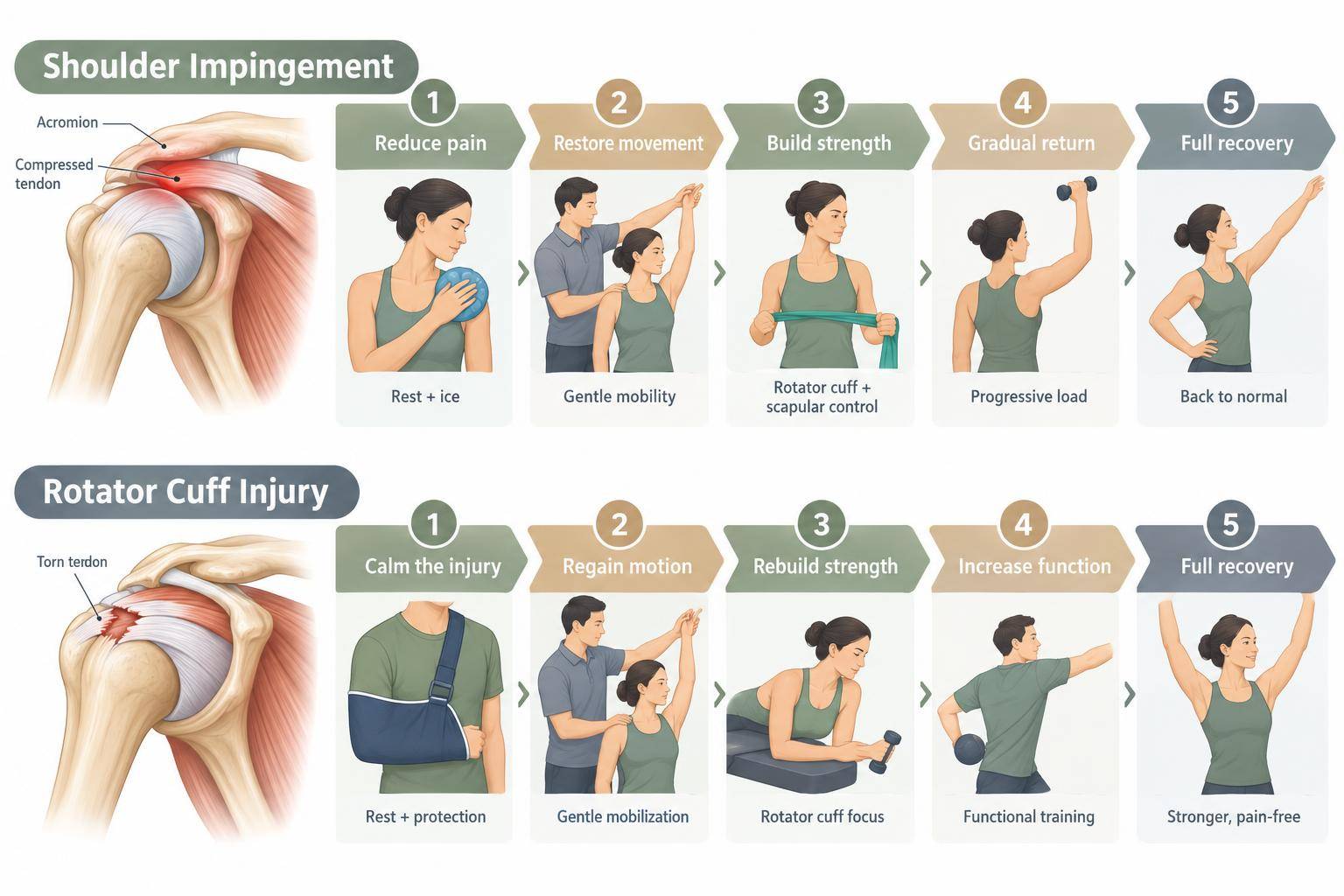
For cuff-related pain that did not follow an injury, guidance includes education, changes to activity and exercise. An assessment can help match those choices to your movement, strength and daily tasks. It can also show when a different problem needs more review. There is no single exercise plan for everyone with overhead pain.[2]
You could discuss which tasks cause pain and which feel manageable. Your goals may include work, home tasks or sport. A clinician can use your findings to guide an exercise plan and check how you respond. For sport-focused reading, see shoulder injury rehabilitation for athletes and sports injury rehabilitation. An athlete’s plan need not suit your needs.[2]

The label matters less than the full picture. Think about when pain started, what movement you have lost and whether strength changed. Gradual pain and sudden weakness after injury do not call for the same response. Use the injury warning above if you have a new, marked loss of function.[1][2]
References
- Rotator Cuff Tendonitis — StatPearls Publishing (2023-08-04)
- East Sussex MSK Community Partnership Shoulder & Elbow Triage Guidelines V2 July 2025 — East Sussex MSK Community Partnership (NHS) (2025)
- Clinical Examination of the Rotator Cuff — PM&R (2013)
- Untwining the intertwined: a comprehensive review on differentiating pathologies of the shoulder and spine — JSES Reviews, Reports, and Techniques (2024)
Related care at Physio Cure Dubai
Doctor-led services for what you have just read about.
Frequently Asked Questions
Can symptoms tell impingement from a cuff problem?
Not on their own. Overhead pain, night pain and a painful arc can overlap. A clinician looks at your story and movement too.
Can impingement and cuff tendon problems overlap?
Yes. Contact around the cuff and changes within its tendons may both play a part. Symptoms cannot show which came first.
When should new shoulder weakness be checked?
Seek prompt medical assessment for a major loss of strength after injury, especially if you cannot lift the arm. A suspected fracture or dislocation needs emergency assessment.
Can cuff pain start without an injury?
Yes. It may build up with repeated shoulder use or start after an injury. Tell the assessor how it began.
Could shoulder pain come from my neck?
Yes. Pain from a neck nerve may burn or feel electric. It may travel past your elbow. Neck and shoulder problems can also occur together.
Why check two kinds of shoulder movement?
One check is how you move the arm yourself. The other is how far it moves while you relax. The difference can help guide an assessment.
Does a painful arc prove impingement?
No. Pain during part of an arm lift is a clue. It does not prove which part of the shoulder hurts.
What might a shoulder assessment include?
A clinician may ask about injury and daily tasks. They may check movement, strength and the neck. These findings can help guide next steps.
Related Articles

Whiplash After a Car Accident: When to Seek Medical Assessment
Learn when whiplash symptoms after a car accident need assessment, red flags to watch for, and what a clinical check may involve.
9 min read

What Should You Bring to Your First Physio Appointment?
Get ready for your first physio visit. Learn what to note, which medicine details to bring, what to wear, and how to plan your arrival.
5 min read
Achilles Tendinitis Recovery: Key Milestones for Runners
Learn achilles tendinitis recovery milestones for runners, from walking pain limits to heel raises, walk-run progressions, and safe training load changes.
8 min read