How Are Sleep and Persistent Pain Connected?

Sleep and lasting pain can affect the same parts of daily life. You may notice both at once and wonder which came first. Researchers have found links between sleep problems and pain that lasts. But those links cannot explain any one person's pain on their own.[1][2] This guide explains what the studies found, where doubt remains, and why sleep belongs in a wider pain discussion.
What does a two-way sleep and pain relationship mean?
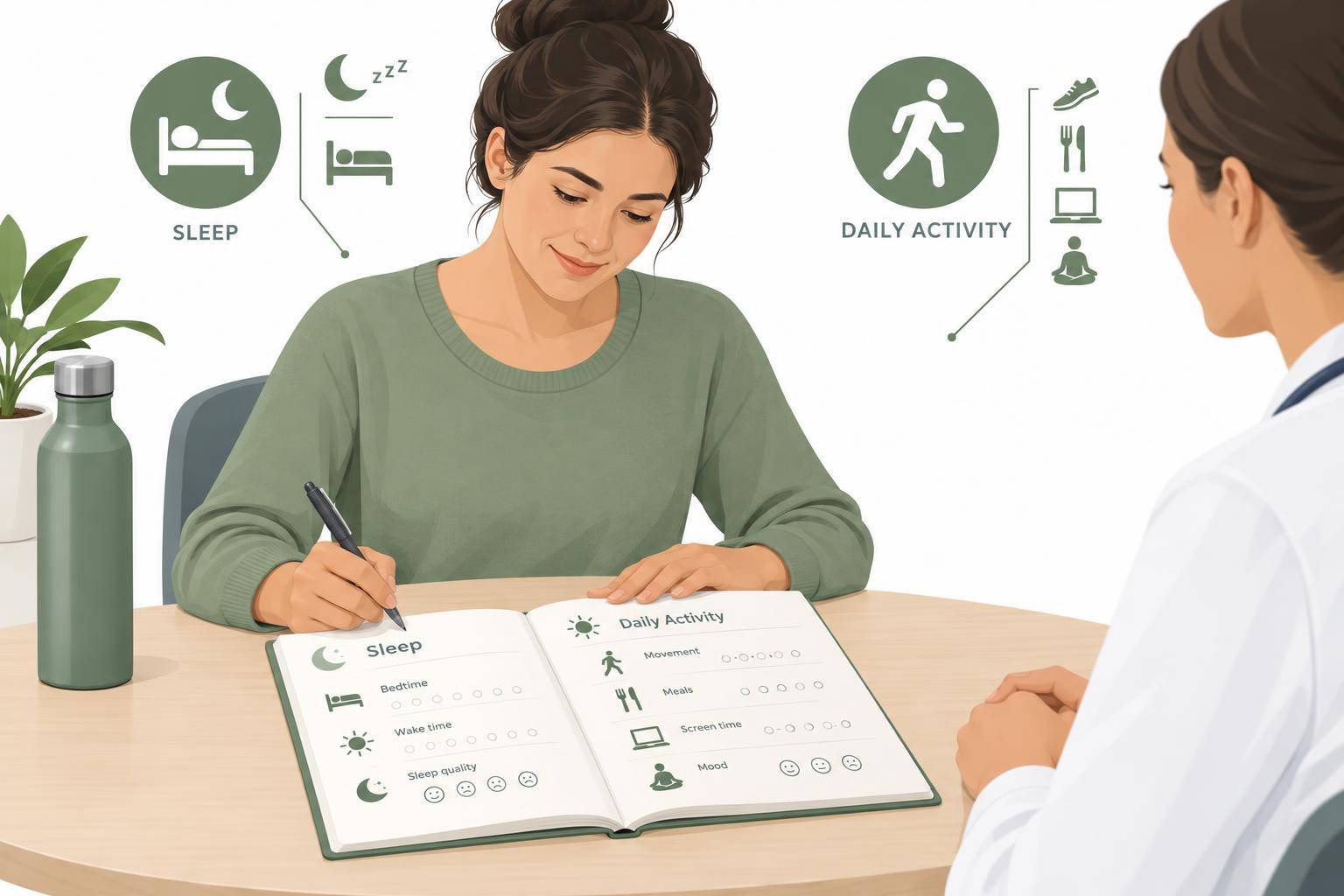
Persistent pain means pain that lasts or keeps coming back for more than three months. Some people also have trouble sleeping. A two-way link means pain may be followed by sleep problems, while sleep problems may be followed by pain. A review found evidence for both links in people with pain in their muscles, bones or joints. Yet it said the full two-way picture needs more study.[3][1]
That distinction matters. A link found across a group does not tell you what caused one bad night. Nor does it tell you why pain changed on one day. Sleep and pain are not single, simple measures. Studies may ask about hours slept, sleep quality, pain strength or how pain affects daily life. Those measures do not all mean the same thing.[4]
Researchers are also studying how mood, thoughts, behavior and body processes may fit together. These possible paths are complex. The research has not settled which paths matter most for each person.[4]
What does research say about sleep and pain?
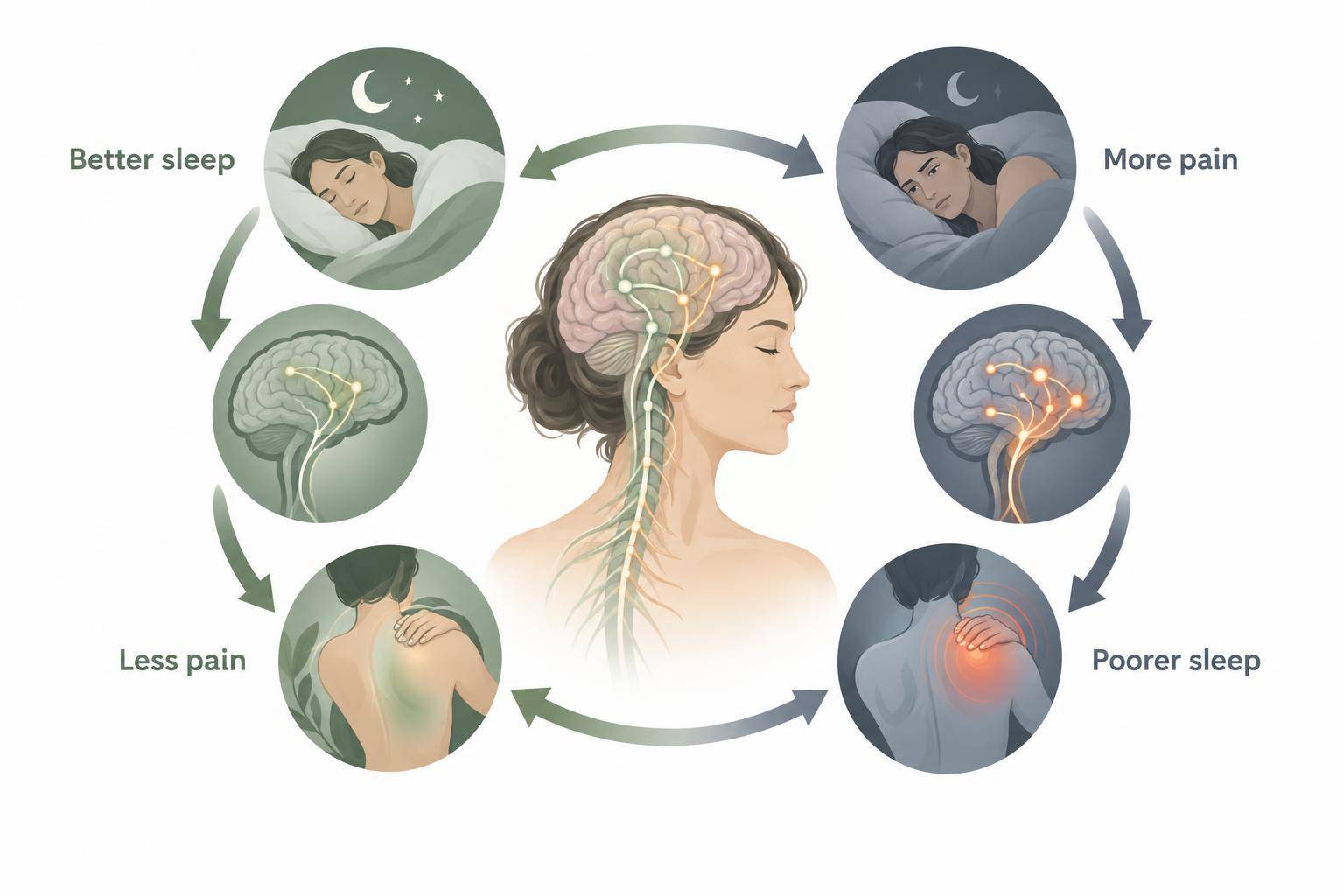
One review followed results from studies of adults with pain in their muscles, bones or joints. People who had sleep problems at the start were more likely to report lasting pain later. People who had lasting pain at the start might also have more sleep problems soon after. The evidence for later sleep problems after pain was much less certain.[1]
Another review looked at changes in sleep over time in the wider public. A drop in both sleep quality and sleep time was linked to a two- to threefold higher risk of a new pain condition. That is a group finding, not a forecast for you. The review also linked worse sleep with poorer reports of physical health.[2]
In that review, better sleep was linked to a small gain in reported physical function. This does not prove that changing sleep habits will improve pain or daily function. The authors said more research is needed to learn whether better sleep can reduce pain.[2]
These findings explain why sleep is worth discussing when you read about chronic pain management. They do not mean that sleep should take the place of looking at other parts of your health and life. A pain assessment should consider both what affects pain and how pain affects your day.[3]
Does this mean poor sleep causes all pain?

No. Studies that follow people over time can show which change came first. They cannot always show that one change caused the other. The review of sleep changes said the cause-and-effect link still needs more study. Its findings on better sleep and better health were not the same in every study.[2]
There is also more than one kind of lasting pain. Sometimes an underlying condition accounts for the pain. At other times, no clear condition fully explains the pain or its effect on life. Both forms can be present at once. A clinician uses the person's history and a wider assessment when thinking about possible causes.[3]
So a poor night of sleep is not a diagnosis. It is useful information, but it cannot rule out another cause of pain. Likewise, pain that disturbs sleep does not show exactly why sleep has changed. If your symptoms change, NICE advises a new look at the pain and any new symptoms.[3]
How is sleep discussed in a whole-person pain assessment?
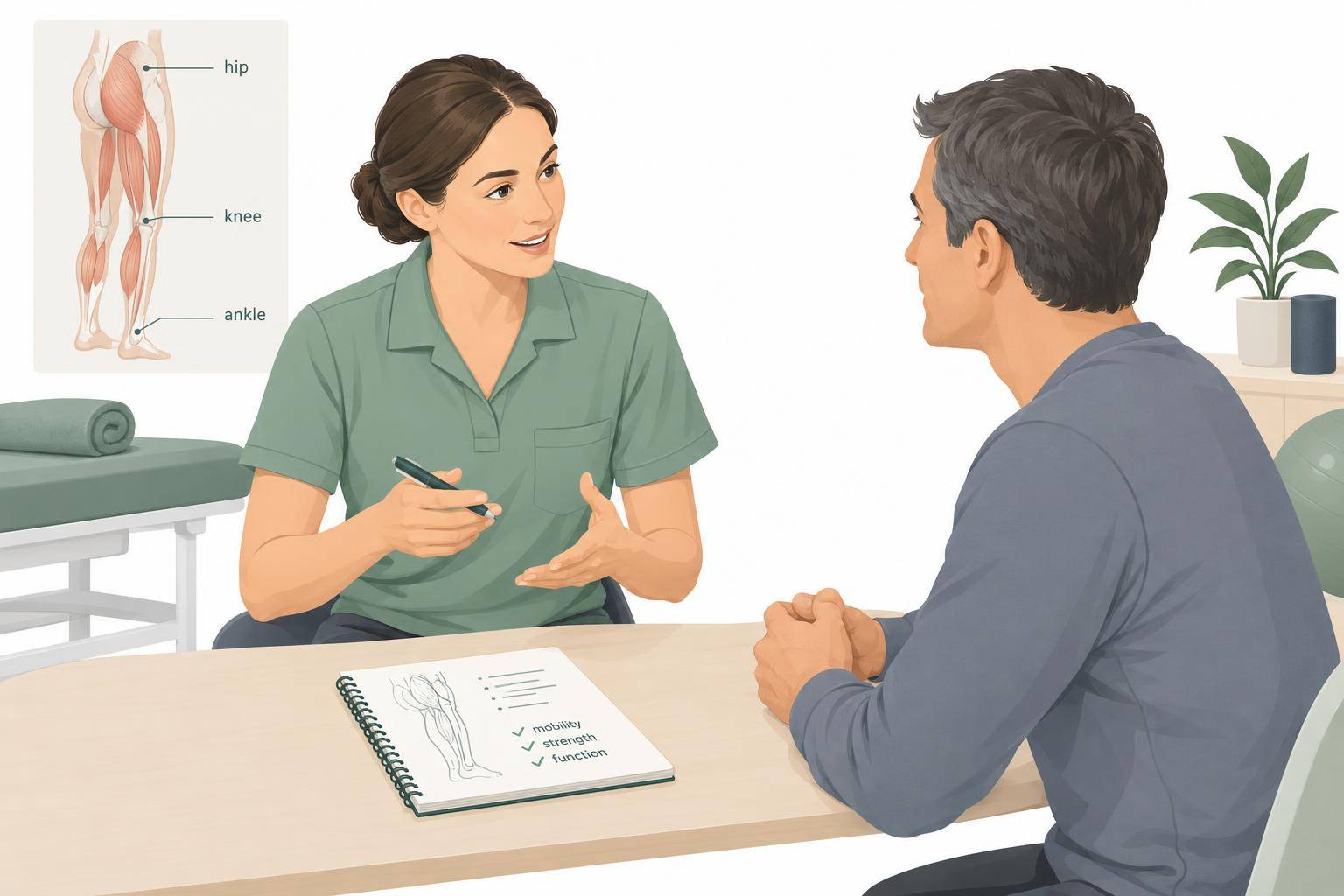
A whole-person assessment looks beyond the place that hurts. NICE recommends asking how pain affects sleep, work, daily tasks and relationships. It also recommends asking how parts of daily life may affect pain. These are topics for an open talk, not a test with right or wrong answers.[3]
You could describe a usual night in plain words. Say whether your sleep has changed, and when you first noticed it. You might also note whether a change in pain happened around the same time. You do not need to decide which caused which. Your account can help put sleep beside other parts of your experience.
A short note may help if it is hard to recall each day. You could record what you noticed about sleep, pain and daily tasks. Add any questions you want to raise. The goal is a clear account, not a perfect record. NICE recommends asking what already helps you, what matters to you, and what you hope to do.[3]
The same broad questions can apply whether pain is in your back or neck. You can read about back pain treatment or neck pain treatment without assuming either page explains your sleep. The Dr. Alaa Abdelaal profile gives information about the named therapist; it is not evidence about the cause of your symptoms.
What can this evidence tell you and what can it not tell you?

The research tells us that sleep deserves a place in a pain conversation. Poorer sleep is linked to later pain outcomes in several studies. It does not tell us that every person with poor sleep will develop pain. It also cannot promise that better sleep will make existing pain go away.[1][2]
NICE notes that pain can rise and fall over time. A sudden spell of worse symptoms is called a flare-up. There may be no clear reason for one. If symptoms change, NICE recommends reassessment. For a flare-up, it recommends reviewing the care plan and considering any new symptoms.[3]
Research about sleep should not erase other goals. NICE says quality of life can improve even if pain stays the same. It recommends a care plan built around a person's goals, strengths and choices. This is not a promise about what any single plan will achieve.[3]
If you want more context on daily life and pain, the desk and back or neck pain article is a related read, not proof of a sleep remedy. The main point remains modest: describe sleep as part of your wider pain experience. Let the full assessment guide what the findings mean for you.[3][1]
References
- The bidirectional relationship between sleep problems and chronic musculoskeletal pain: a systematic review with meta-analysis. — pubmed.ncbi.nlm.nih.gov
- Effects of sleep changes on pain-related health outcomes in the general population: A systematic review of longitudinal studies with exploratory meta-analysis — Sleep Medicine Reviews (2018)
- Recommendations | Chronic pain (primary and secondary) in over 16s: assessment of all chronic pain and management of chronic primary pain | Guidance | NICE — www.nice.org.uk
- Sleep and Pain — The Clinical Journal of Pain (2019)
Related care at Physio Cure Dubai
Doctor-led services for what you have just read about.
Frequently Asked Questions
What counts as persistent pain?
Persistent pain lasts or keeps coming back for more than three months.<sup data-cite="source_1"></sup>
Can pain and sleep problems affect each other?
Studies suggest links in both directions. But researchers say the full two-way link needs more study.<sup data-cite="source_2"></sup>
Does poor sleep cause every kind of pain?
No. A link in a study does not prove the cause of one person's pain. A pain assessment looks at possible causes and the wider effect on life.<sup data-cite="source_1,source_3"></sup>
What does research say about worse sleep over time?
One review linked a drop in sleep quality and time to a higher risk of a new pain condition. That finding does not predict what will happen to one person.<sup data-cite="source_3"></sup>
Will sleeping better make my pain go away?
That is not certain. A review found that better sleep did not always go with better health. It could not say whether better sleep can reduce pain.<sup data-cite="source_3"></sup>
Why might a clinician ask about my sleep?
NICE recommends asking how lasting pain affects sleep and daily life. It also recommends asking how life may affect pain.<sup data-cite="source_1"></sup>
What if my usual pain changes?
NICE recommends reassessment when symptoms change. During a flare-up, it recommends reviewing the care plan and considering new symptoms.<sup data-cite="source_1"></sup>
Should I stop a medicine if I think it affects my sleep?
Do not make that choice on your own. NICE recommends shared decisions when reviewing certain medicines and discussing possible withdrawal problems.<sup data-cite="source_1"></sup>
Related Articles

Can You Pause or Stop a Pelvic Floor Physiotherapy Visit?
You can pause or stop a pelvic floor physiotherapy examination. Learn what to say, what you can ask, and what care may still be possible.
5 min read

5 Checks Before Starting Knee Osteoarthritis Exercises
Learn what a physiotherapist assesses before knee osteoarthritis exercises, including symptoms, swelling, strength, function, and safety checks first.
9 min read

Poor Posture & Chronic Pain: Causes, Fixes, Relief
Discover how poor posture triggers muscle imbalance, disc pressure, and nerve pain—plus physiotherapy solutions, ergonomic fixes, and exercises for relief.
17 min read