VR Therapy Revolutionizes Vestibular Rehab & Balance
A New Reality for Balance: The Revolutionary Impact of Using VR Therapy for Vestibular Rehabilitation
Living with a vestibular disorder can feel like navigating a world that’s constantly shifting beneath your feet. The persistent dizziness, vertigo, and imbalance can be deeply unsettling, affecting everything from your ability to work to your confidence in simply walking across a room. For years, traditional physiotherapy has been the cornerstone of treatment, but it often involves repetitive, monotonous exercises that can be challenging to stick with. Now, a groundbreaking approach is changing the landscape of recovery. By using VR therapy for vestibular rehabilitation, clinics like Physio Cure Dubai are offering a more engaging, effective, and hopeful path forward, immersing patients in controlled, dynamic worlds to retrain their brain and reclaim their balance.
Understanding the Unseen Source of Dizziness and Vertigo
Before we dive into the virtual world, it’s essential to understand the real-world system that keeps us upright: the vestibular system. Tucked away in your inner ear, this intricate network of canals and sensors works in harmony with your eyes and sensory nerves to provide your brain with a constant stream of information about your body's position and movement. It’s your internal gyroscope, allowing you to walk, run, and turn your head without losing your balance or sense of place. When this system is damaged by injury, illness (like Meniere’s disease or vestibular neuritis), or other conditions, the signals to the brain become scrambled. The result is a cascade of disorienting symptoms: vertigo (a spinning sensation), dizziness, nausea, and a profound sense of instability. These aren’t just minor inconveniences; they can severely impact one's quality of life, leading to a fear of movement and social isolation.
The Traditional Approach: The Foundation of Vestibular Rehab Exercises
For decades, the gold standard for treating these issues has been Vestibular Rehabilitation Therapy (VRT). This specialized form of physiotherapy focuses on three main principles: habituation, gaze stabilization, and balance training. A licensed therapist, often a Doctor of Physical Therapy, guides the patient through a series of specific head, eye, and body movements. The goal is to help the brain compensate for the faulty signals coming from the inner ear. Habituation exercises, for example, involve repeatedly exposing the patient to movements that provoke dizziness, gradually desensitizing the brain's response. Gaze stabilization exercises work to improve eye control during head movement, reducing the sense that the world is "bouncing" or "swimming." While effective, traditional VRT has a significant hurdle: patient adherence. The exercises can be repetitive and, frankly, boring. Performing the same head turns and balance drills for 20-40 minutes several times a day requires immense discipline, and many patients struggle to maintain the consistency needed for optimal results.
At Physio Cure Dubai, we recognize that patient engagement is a critical component of recovery. Our doctor-led philosophy means we are always seeking innovative, evidence-based methods that not only treat the root cause but also empower and motivate our patients throughout their journey.
A Digital Revolution: Using VR Therapy for Vestibular Rehabilitation Exercises
This is where Virtual Reality (VR) steps in, transforming the entire therapeutic experience. Imagine swapping a sterile clinic room for a walk through a vibrant virtual forest or a calm trip through a simulated supermarket. By using a VR headset, patients are transported into immersive, 3D environments where their therapy exercises become part of an engaging and interactive game. This isn't just about making therapy more fun; it’s about creating a precisely controlled sensory environment. A skilled physiotherapist can manipulate the virtual world to challenge the patient's vestibular system in ways that are simply not possible in a traditional setting. They can control the speed of movement, the complexity of the visual field (optokinetic stimulation), and introduce balance perturbations in a completely safe and repeatable manner. This allows for a highly personalized and progressive treatment plan that adapts to the patient's unique needs and progress, moving far beyond one-size-fits-all worksheets.
The Science-Backed Edge: Evidence for VR in Dizziness Treatment Physiotherapy
The shift towards VR isn't just based on anecdotal success; it's supported by a growing body of scientific research. Multiple studies have shown that VR-based therapy is not only as effective as conventional VRT but often superior in key areas. Patients undergoing VR therapy frequently report faster and more significant reductions in their symptoms. A landmark study published in the National Center for Biotechnology Information highlighted how VR therapy can lead to substantial improvements. The research demonstrates that VR significantly reduces dizziness scores and enhances postural control, with benefits that persist long after the treatment course is complete. The immersive nature of the therapy helps the brain to re-calibrate more effectively, leading to lasting relief.
The advantages of integrating VR into a physiotherapy plan are clear and compelling:
- Enhanced Patient Motivation: VR turns tedious exercises into enjoyable challenges, dramatically improving patient engagement and adherence to the treatment plan. This leads to more consistent practice and, ultimately, better outcomes.
- Superior Symptom Reduction: Studies have shown that VR can provide faster relief from vertigo and dizziness symptoms compared to traditional methods alone, as measured by standardized tests like the Dizziness Handicap Inventory (DHI).
- Improved Postural Stability and Balance: By simulating real-world scenarios in a safe environment, VR provides exceptional balance training for vertigo. Patients can practice navigating complex environments without any risk of falling, leading to measurable improvements in stability and confidence.
- Personalized and Progressive Challenges: VR software allows therapists to precisely dose the sensory stimuli and difficulty level for each patient, ensuring the therapy is always challenging but never overwhelming.
- Objective Performance Tracking: Advanced VR systems provide detailed, objective data on a patient's performance, allowing therapists to accurately track progress and fine-tune the treatment plan for maximum effectiveness.
What Does a VR Balance Training Session Look Like?
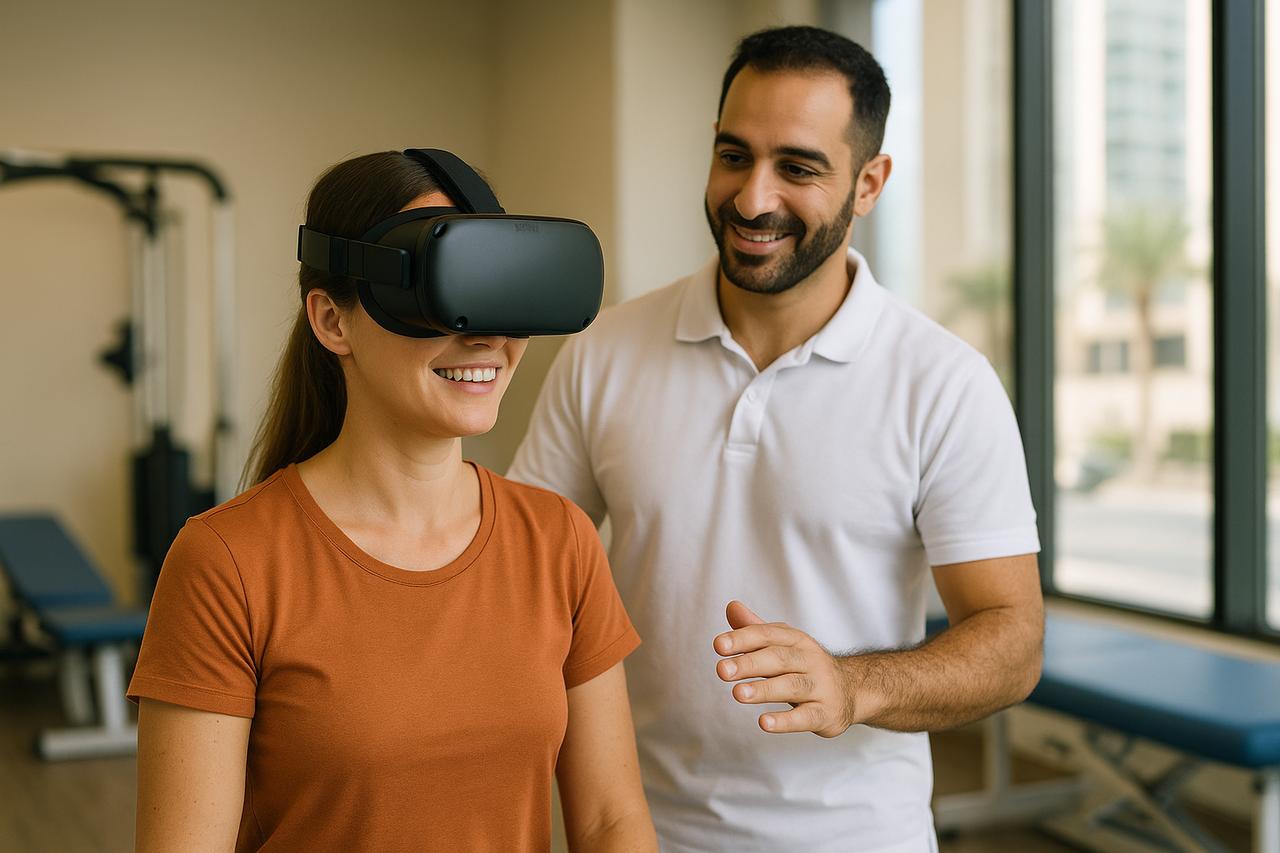
Your journey with VR therapy begins with a comprehensive assessment by a licensed Doctor of Physical Therapy. At a clinic like Physio Cure Dubai, this initial step is crucial for a root-cause diagnosis, ensuring the treatment plan is 100% personalized to your specific condition. Once your plan is established, your VR sessions will be guided one-on-one by your therapist. You’ll be fitted with a lightweight VR headset and may stand on a stable surface or a force plate to measure your balance. Your therapist will then launch a specific program designed for you. You might find yourself in a virtual environment where you need to track moving objects with your eyes (saccadic exercises), shift your weight to "catch" virtual items, or maintain your balance while the visual world around you moves. A typical session lasts between 30 and 40 minutes. While some patients may experience a temporary increase in symptoms during the session (a sign the system is being correctly challenged), this is carefully monitored. The overwhelming feedback from patients is one of empowerment and satisfaction, as they can actively see and feel their progress in a dynamic way.
A key tip for patients: Trust the process and your therapist. It's normal to feel a bit unsteady during initial VR sessions. This is your brain actively learning to adapt. Open communication with your physiotherapist is vital to ensure the challenge is at the perfect level for you.
VR therapy represents a paradigm shift in how we approach vestibular disorders. It’s a powerful fusion of medical science and cutting-edge technology, aligning perfectly with a holistic, evidence-based approach to patient care. By making rehabilitation an active, engaging, and even enjoyable process, it offers renewed hope to those who have been struggling with the debilitating effects of dizziness and imbalance. It’s more than just a new tool; it’s a new reality for recovery, empowering patients to confidently step back into a stable, balanced life.
Ready to explore a modern, effective solution for your balance and dizziness issues? Discover how Physio Cure Dubai is leading the way. Contact us today to learn more about our doctor-led vestibular rehabilitation programs and take your first step towards a steadier, clearer future.
Related care at Physio Cure Dubai
Doctor-led physiotherapy under the medical direction of Dr. Mina Gamil. If anything in this article sounds like you, two of our programs are most relevant:
- Specialty hub: Neurological Physiotherapy
- Treatment program: Post-Surgery Physiotherapy
Related care at Physio Cure Dubai
Doctor-led services for what you have just read about.
Frequently Asked Questions
What is vestibular rehabilitation therapy (VRT)?
Vestibular rehabilitation therapy is a specialized form of physiotherapy designed to treat balance and dizziness problems arising from inner ear disorders. It uses specific exercises involving head, eye, and body movements to help the brain compensate for faulty signals from the vestibular system, focusing on principles like habituation, gaze stabilization, and balance training.
What are the symptoms of a vestibular disorder?
Common symptoms of a vestibular disorder include vertigo (a spinning sensation), persistent dizziness, nausea, and a profound sense of instability or imbalance. These symptoms can severely impact a person's quality of life, confidence, and ability to perform daily activities.
How does VR therapy help with dizziness and balance problems?
VR therapy immerses a patient in a controlled, 3D virtual environment. This transforms traditional, repetitive exercises into engaging and interactive games, which improves patient motivation. A physiotherapist can precisely manipulate the virtual world to safely challenge the patient’s balance and visual systems in ways not possible in a normal clinic setting, helping the brain re-calibrate more effectively.
Is VR therapy for vertigo scientifically proven to be effective?
Yes, a growing body of scientific research shows that VR-based therapy is effective for treating vertigo and dizziness. Studies have demonstrated that it can lead to faster and more significant reductions in dizziness scores and improvements in postural control compared to conventional methods alone.
What happens during a VR balance training session?
A typical session is guided one-on-one by a licensed physiotherapist. The patient wears a VR headset and performs specific tasks within a virtual environment, such as tracking moving objects or maintaining balance while the visual world moves. Sessions usually last between 30 and 40 minutes and are tailored to the patient's specific condition and progress.
Does Physio Cure Dubai offer VR therapy for vestibular rehabilitation?
Yes, the article mentions Physio Cure Dubai as a clinic that uses VR therapy for vestibular rehabilitation, describing it as an engaging, effective, and hopeful path for patients to retrain their brain and reclaim their balance.
What is Physio Cure Dubai's overall approach to treatment?
Physio Cure Dubai's approach is built on four principles: all treatments are doctor-led by professionals with advanced degrees; care is 100% personalized starting with a comprehensive assessment; the focus is on diagnosing and treating the root cause of the problem; and they combine a holistic view with evidence-based practices and modern technology.
Can I use my insurance to pay for treatment at Physio Cure Dubai?
Physio Cure Dubai operates on a 'pay upfront' basis and does not offer direct billing to insurance companies. Patients are required to pay for their services in full and are then provided with all the necessary invoices and medical documents to submit a claim to their insurer for reimbursement.
Who performs the treatments at Physio Cure Dubai?
All assessments, diagnoses, and treatments at Physio Cure Dubai are performed by licensed doctors with advanced qualifications, such as a Doctor of Physical Therapy (DPT). The clinic emphasizes that care is delivered by doctors, not technicians.
How can patients manage the cost of treatment at Physio Cure Dubai?
To make payments more manageable, Physio Cure Dubai accepts Tabby, which allows the cost of treatment to be spread over several months. They also offer discounts for members of certain loyalty programs, such as a 25% discount for Fazaa members and special offers for Alsaada members.
Related Articles

Movement Breaks: Boost Workplace Wellness & Productivity
Strategic movement breaks ease back pain, boost metabolic health, and sharpen focus. Learn step-by-step ergonomic tips for a productive, healthy workday.
13 min read

Dry Needling Explained: Relieve Persistent Myofascial Pain
Learn how doctor-led dry needling in Dubai releases trigger points, eases chronic myofascial pain, and restores mobility for athletes, desk workers…
13 min read

Stroke Rehabilitation: What Recovery Looks Like Month by Month
Learn how stroke rehabilitation can progress month by month, from early hospital care to outpatient therapy, with practical guidance for recovery needs.
4 min read