Dry Needling for Trigger Points: Relieve Pain & Move Free
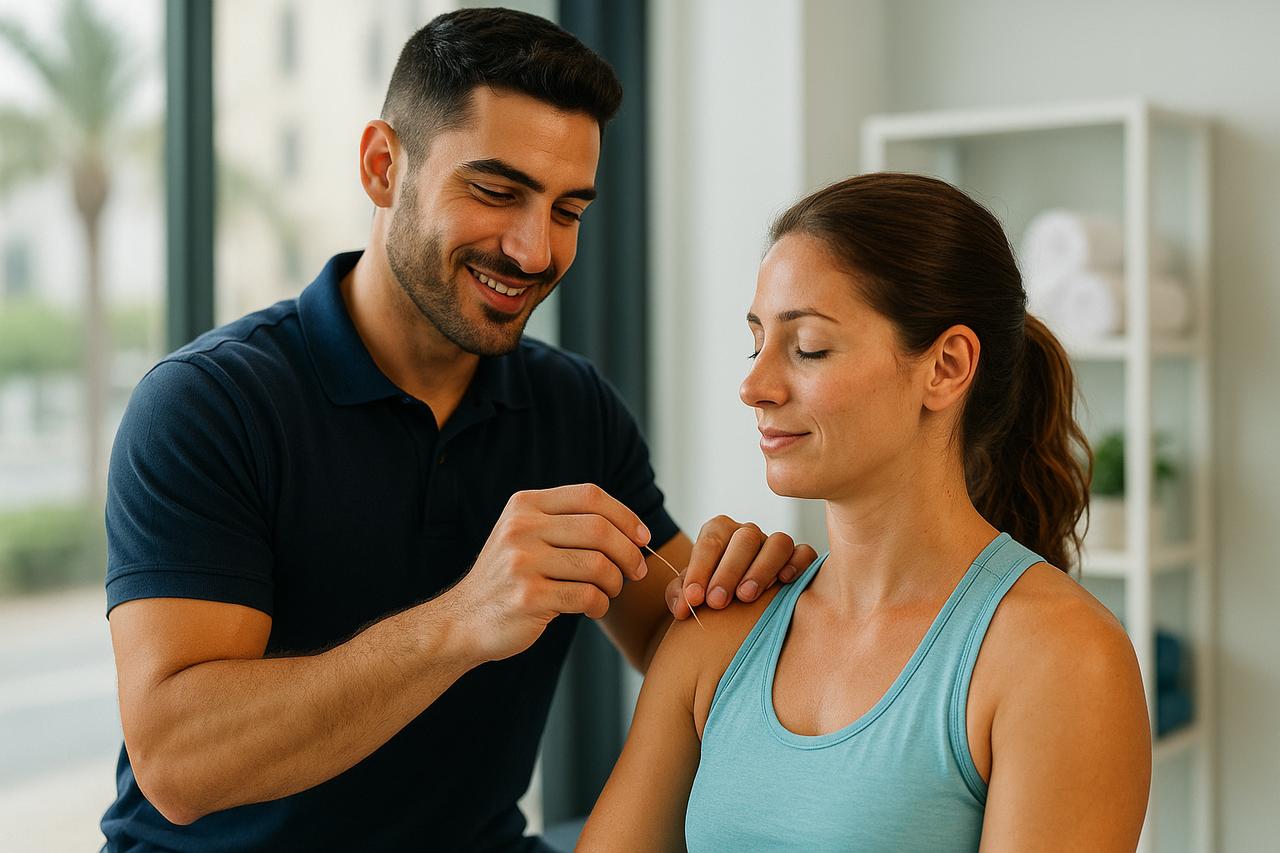
Beyond the Knot: How Dry Needling Resolves Trigger Points and Restores Movement
If you've ever felt a stubborn, painful "knot" in your muscle that just won't go away, you've likely encountered a myofascial trigger point. These small but mighty sources of discomfort can limit your movement, disrupt your sleep, and significantly impact your quality of life. While traditional massage and stretching can provide temporary relief, a more targeted and scientific approach is often needed for lasting results. At Physio Cure Dubai, we see firsthand the profound impact of these knots on our patients. That's why understanding trigger points and how dry needling helps is a crucial part of our doctor-led approach to manual therapy, offering a powerful solution to unlock chronic muscle pain and restore function.
The Anatomy of a Knot: Demystifying Myofascial Trigger Points
Before we can explore the solution, it's essential to understand the problem. A myofascial trigger point isn't just a simple muscle cramp. It is a hyper-irritable spot located within a taut band of skeletal muscle. Think of it as a micro-cramp affecting a tiny patch of muscle fibers. When compressed, this spot can be acutely tender and, most distinctively, can cause referred pain—pain felt in a different part of the body.
These frustrating knots develop for various reasons, including:
- Acute Trauma: A sudden injury from a fall, accident, or sports-related incident.
- Repetitive Overuse: Performing the same motions repeatedly, such as typing, lifting, or swinging a golf club.
- Chronic Postural Strain: Sustained poor posture from sitting at a desk, looking down at a phone ("tech neck"), or improper sleeping positions.
- Emotional Stress: Psychological stress can lead to unconscious and prolonged muscle tension.
Trigger points can be classified into two main types. Active trigger points cause spontaneous pain and are responsible for the symptoms you feel day-to-day. Latent trigger points are only painful when direct pressure is applied but can still contribute to muscle stiffness, restricted range of motion, and weakness. For a deeper clinical overview, expert resources like the London Pain Clinic provide extensive information on their characteristics and impact. Ignoring them allows the underlying dysfunction to persist, often leading to chronic myofascial pain treatment challenges.
Introducing Dry Needling: A Precision Tool for Myofascial Pain Treatment
Dry needling is a skilled intervention used by our Doctors of Physical Therapy to treat musculoskeletal conditions rooted in trigger points. It involves inserting a thin, sterile, solid filiform needle—the same kind used in acupuncture—directly into the trigger point. The term "dry" simply means that no medication or substance is injected; the needle itself is the treatment tool.
At Physio Cure Dubai, this is a cornerstone of our doctor-led, evidence-based approach. Unlike a general massage, dry needling allows a therapist to target dysfunctional tissue at a depth that hands cannot reach. It is a precise, anatomically-driven procedure designed to mechanically and neurologically disrupt the pain-producing knot, prompting it to release and initiating a healing response.
Dry needling is most effective when it's part of a comprehensive, doctor-led treatment plan that addresses the root cause of your pain, not just the symptoms. It’s about restoring function, not just providing a quick fix.
Dry Needling vs Acupuncture: Understanding the Difference
While both practices use the same type of needle, their philosophies, diagnostic methods, and goals are fundamentally different. This is a common point of confusion, so it's important to clarify the distinction.
- Acupuncture is a technique rooted in Traditional Chinese Medicine (TCM). Its goal is to restore the flow of life energy, or "Qi," throughout the body. Needles are placed along specific energy pathways known as meridians, which do not necessarily correspond to the anatomical location of pain.
- Dry Needling is a modern, Western medical modality based on neuroanatomy and musculoskeletal science. The practitioner identifies a palpable trigger point and inserts the needle directly into that dysfunctional tissue. The goal is to release the knot, reduce pain, and restore muscle function. It is a form of trigger point therapy, not energy work.
In essence, the only similarity is the tool. The clinical reasoning, application, and therapeutic goals are worlds apart. At Physio Cure, our practice of dry needling is strictly grounded in evidence-based anatomical and physiological principles.
The Science of Relief: How Dry Needling Deactivates Trigger Points
So, what happens on a physiological level when the needle enters the trigger point? The magic of dry needling lies in its ability to create powerful, localized changes that break the chronic pain cycle. The therapeutic effects are multi-faceted and supported by a growing body of scientific research.
The primary mechanisms include:
- Eliciting a Local Twitch Response (LTR): When the needle accurately stimulates a trigger point, it often causes an involuntary, brief contraction of the taut muscle band. This LTR is a spinal cord reflex and is considered a key sign of successful treatment. This twitch helps to break the contracted sarcomeres (the tiny contractile units of muscle), effectively "resetting" the muscle fiber and reducing the spontaneous electrical activity that keeps the knot active.
- Restoring Local Circulation and Chemistry: The persistent contraction within a trigger point compresses local blood vessels, leading to ischemia (lack of blood flow). This starves the tissue of oxygen and allows pain-generating metabolic waste products, like bradykinin and substance P, to accumulate. The micro-trauma from the needle helps to increase blood flow, flushing out these irritants and delivering oxygen-rich blood to promote healing.
- Modulating the Nervous System: The needle acts as a powerful stimulus to the nervous system. It can help block pain signals from reaching the brain (a process known as the "gate control theory of pain") and can trigger the release of the body's natural painkillers, such as endorphins. This helps to desensitize the area and normalize the nerve signals to and from the muscle.
The Proven Benefits: What to Expect from Trigger Point Therapy
When performed by a skilled clinician as part of a holistic treatment plan, the benefits of dry needling are significant. Patients often report immediate improvements, with progressive gains over a series of sessions. The key trigger points and how dry needling helps benefits include:
- Significant Pain Reduction: By deactivating the source of the pain, dry needling can provide rapid and lasting relief from both local and referred symptoms.
- Improved Range of Motion: Releasing tight muscle bands allows joints to move more freely and without restriction.
- Enhanced Muscle Function: A muscle inhibited by a trigger point cannot contract optimally. Deactivating the knot helps restore normal muscle activation patterns and strength.
- Accelerated Recovery: For athletes and active individuals, dry needling can be a game-changer, helping to resolve stubborn muscle tightness and speed up the return to activity. It is a vital component of our sports injury rehabilitation programs.
Your Recovery Journey: What a Dry Needling Session Involves
Your experience with dry needling at Physio Cure Dubai is built on our core philosophy of personalized, doctor-led care. It's not a standalone treatment but an integrated part of your recovery journey.
A typical session follows a structured path:
- Comprehensive Assessment: Your Doctor of Physical Therapy will conduct a thorough evaluation to identify the root cause of your pain and locate the specific trigger points responsible for your symptoms.
- The Procedure: You will be positioned comfortably. The therapist will clean the skin and use sterile, single-use needles. You might feel a tiny prick as the needle enters the skin. As the needle reaches the trigger point, you may feel a deep ache or the characteristic muscle twitch (LTR), which, while unusual, is a positive sign.
- Post-Needling Care: Immediately after, your therapist will guide you through gentle stretches and movements to integrate the newly gained mobility and prevent soreness.
It is common to experience some muscle soreness, similar to post-workout soreness, for 24-48 hours after the session. This is a normal response and indicates that a positive physiological change has occurred.
After a dry needling session, gentle stretching, staying hydrated, and applying a heat pack are crucial to minimize soreness and maximize the therapeutic benefits of the treatment.
Dry needling is a safe and effective treatment when performed by a highly trained professional. At Physio Cure, our senior practitioners possess advanced qualifications, ensuring the highest standards of safety and care. We believe in empowering our patients with knowledge and an active role in their recovery, combining hands-on therapies like dry needling with guided exercise and education to achieve lasting results.
Ready to find lasting relief from stubborn muscle knots and trigger points? Our doctor-led team specializes in advanced techniques like dry needling as part of a fully personalized treatment plan. Contact us to book your comprehensive assessment today and take the first step towards a pain-free life.
Related care at Physio Cure Dubai
Doctor-led physiotherapy under the medical direction of Dr. Mina Gamil. If anything in this article sounds like you, two of our programs are most relevant:
- Specialty hub: Orthopedic Physiotherapy
- Treatment program: Back Pain Treatment
Related care at Physio Cure Dubai
Doctor-led services for what you have just read about.
Frequently Asked Questions
What is a myofascial trigger point?
A myofascial trigger point, commonly known as a muscle knot, is a hyper-irritable spot located within a taut band of skeletal muscle. When compressed, it can be acutely tender and cause referred pain, which is pain felt in a different part of the body.
What causes muscle knots or trigger points?
Trigger points can develop from several factors, including acute trauma from an injury or accident, repetitive overuse from motions like typing, chronic postural strain from sitting at a desk or poor sleeping positions, and emotional stress that leads to prolonged muscle tension.
What is the difference between dry needling and acupuncture?
While both use the same type of needle, their philosophies are different. Dry needling is a modern Western medical technique based on neuroanatomy, where a practitioner inserts a needle directly into a muscle's trigger point to release pain and restore function. Acupuncture is a practice from Traditional Chinese Medicine that aims to restore energy flow (Qi) by placing needles along specific energy pathways (meridians).
How does dry needling work to relieve pain?
Dry needling helps relieve pain through several physiological mechanisms. It can elicit a 'local twitch response' that resets the muscle fiber, increase blood flow to the area to flush out pain-generating substances, and stimulate the nervous system to block pain signals and release the body's natural painkillers like endorphins.
Does Physio Cure Dubai offer dry needling?
Yes, dry needling is a cornerstone of the doctor-led, evidence-based approach at Physio Cure Dubai. It is a skilled intervention used by their Doctors of Physical Therapy to treat musculoskeletal conditions as part of a comprehensive treatment plan.
Who performs dry needling at Physio Cure Dubai?
At Physio Cure Dubai, all assessments, diagnoses, and treatments, including dry needling, are performed by licensed Doctors of Physical Therapy. The clinic emphasizes a doctor-led approach where treatments are not performed by technicians.
What should I expect during a dry needling session?
A session begins with a comprehensive assessment to locate the trigger points. During the procedure, a sterile needle is inserted into the muscle, which may cause a deep ache or a muscle twitch, considered a positive sign. Afterward, the therapist will likely guide you through gentle stretches. It is normal to experience muscle soreness, similar to post-workout soreness, for 24-48 hours.
Is dry needling a standalone treatment?
No, dry needling is most effective when it is part of a comprehensive, doctor-led treatment plan that addresses the root cause of pain. At Physio Cure Dubai, it is integrated with other hands-on therapies, guided exercises, and patient education to achieve lasting results, rather than being used as a 'quick fix.'
Can I use my insurance for dry needling at Physio Cure Dubai?
Physio Cure Dubai operates on a 'pay upfront' basis and does not offer direct billing to insurance companies. Patients must pay for their services in full and then submit a claim to their insurer for reimbursement. The clinic provides all the necessary medical documentation and invoices required for the claim process.
What other advanced therapies does Physio Cure Dubai offer besides dry needling?
In addition to being a cornerstone of their manual therapy, Physio Cure Dubai integrates other modern therapeutic modalities into its treatment plans, including Cupping Therapy, Acupuncture, and a patient-mentioned 'Al decompression machine' for spinal issues.
Related Articles
Chest Physiotherapy Guide for Fast Mucus Clearance Relief
Clear stubborn chest congestion today. Discover expert chest physiotherapy techniques for mucus clearance, stronger lungs, and easier breathing in Dubai.
17 min read
Cupping Therapy: Step-by-Step Process, Safety & Benefits
Discover how cupping therapy at Physio Cure Dubai eases pain, boosts circulation, and accelerates recovery. Learn the session process and key aftercare tips.
14 min read

9 Questions to Ask Before Choosing a Physiotherapy Clinic in Dubai
Nine practical questions to ask before choosing a physiotherapy clinic in Dubai, covering consent, shared decisions, roles, risks, and support.
7 min read