TMJ Pain & Headaches: Doctor-Led Physiotherapy Relief
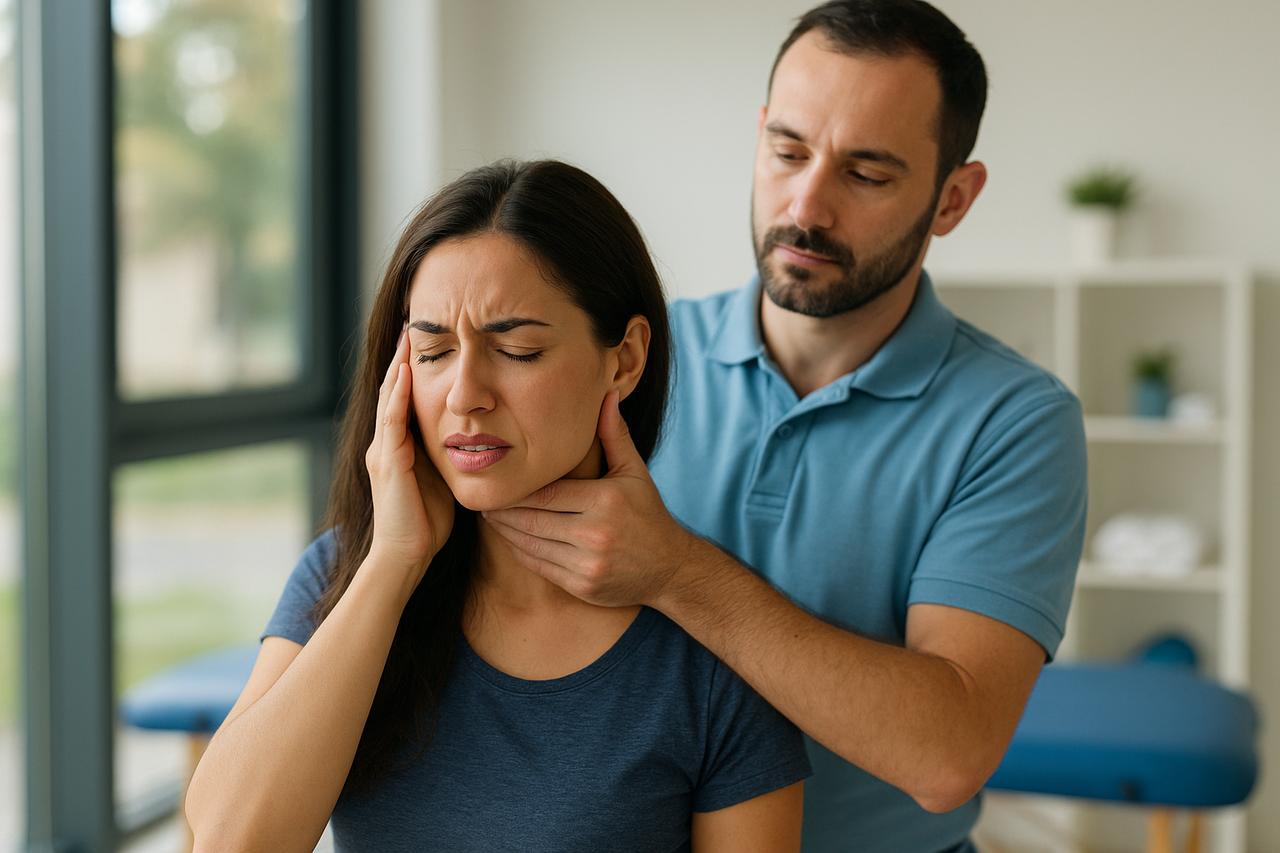
Beyond the Jaw: Unraveling the Intricate TMJ Pain and Headache Connection
That persistent, throbbing headache that seems to have no clear origin—could the answer be hiding in plain sight? For millions of adults, the source of chronic head pain isn't stress or vision problems, but a complex and often misunderstood issue originating in the jaw. The tmj pain and headache connection is a real and debilitating phenomenon, where dysfunction in the temporomandibular joint (TMJ) directly triggers or worsens headaches. If you've been chasing relief with no success, it’s time to look at the bigger picture. At Physio Cure Dubai, our doctor-led philosophy focuses on uncovering the root cause of your pain. We understand that effective, lasting relief requires specialized care, and our advanced TMJ manual therapy can finally provide the answers you deserve.
Understanding the Link: How Jaw Problems Trigger Headaches
The temporomandibular joint (TMJ) is one of the most complex joints in the body, acting as a sliding hinge connecting your jawbone to your skull. It’s responsible for the essential movements of chewing, talking, and yawning. When this intricate system of muscles, ligaments, and bone becomes dysfunctional—a condition known as Temporomandibular Disorder (TMD)—the effects can radiate far beyond the jaw itself.
But how exactly does a jaw problem lead to a headache? The connection is multifaceted:
- Muscle Tension and Referred Pain: The muscles used for chewing (masticatory muscles) are large and powerful. When the TMJ is misaligned or stressed, these muscles can become overworked, tight, and develop painful trigger points. This tension doesn't stay localized. It refers pain to other areas of the head, commonly the temples, forehead, and behind the eyes, mimicking the sensation of a classic tension-type headache.
- Nerve Irritation: The trigeminal nerve, a major nerve responsible for sensation in the face and motor functions like biting and chewing, is intimately linked with the TMJ. Inflammation and tension from TMD can irritate branches of this nerve, which is a key player in the generation of both tension headaches and migraines. As noted in clinical research, this irritation can not only cause headaches but also act as a significant aggravating factor for those already prone to migraines. For more on this, you can review the connection between TMJ disorders and headaches.
- Altered Biomechanics: A dysfunctional jaw can lead to subtle but significant changes in how you hold your head and neck. To compensate for jaw pain or limited movement, you might unconsciously alter your posture, leading to strain on the cervical spine (neck). This neck strain is a well-known contributor to cervicogenic headaches, creating a vicious cycle of pain from the jaw to the neck and head. This is why a holistic approach to back pain treatment and posture is crucial.
Don't dismiss that 'click'! A noisy or stiff jaw is often the first, most overlooked sign that your TMJ is under stress and may be contributing to your headaches.
Is Your Headache Coming From Your Jaw? Key Signs and Symptoms
Distinguishing a TMJ-related headache from other types can be tricky, but there are several telltale signs that suggest your jaw is the culprit. If you experience persistent headaches alongside any of the following symptoms, it’s a strong indication that you should seek a professional assessment for TMD:
- Pain Location: The headache is typically felt in the temples, behind the eyes, at the base of the skull, or even wrapping around the head like a tight band.
- Jaw Sounds: A distinct clicking, popping, or grinding sound when you open or close your mouth.
- Limited Jaw Movement: Difficulty opening your mouth wide, or a feeling that your jaw is "locking" or getting stuck.
- Pain with Function: Your headache worsens when you chew, talk for extended periods, or yawn.
- Morning Headaches: Waking up with a headache and a sore, stiff jaw can be a sign of nighttime teeth grinding (bruxism), a major contributor to TMD.
- Facial and Ear Pain: A dull ache in or around your ear (not related to an infection), facial tenderness, and a feeling of fullness in the ears.
- Muscle Tenderness: The muscles along your jaw, cheeks, and temples are sore to the touch.
Recognizing these patterns is the first step. The next, and most crucial, is getting an accurate diagnosis from a specialist who understands the intricate biomechanics of the head, neck, and jaw. This is where a doctor-led approach becomes essential for effective jaw pain treatment.
The Physio Cure Difference: A Doctor-Led Diagnosis for Jaw Pain Treatment
At Physio Cure Dubai, we are founded on the principle of "Root-Cause Diagnosis." We don't believe in simply masking symptoms. Our mission is to deliver personalized, evidence-based physiotherapy that uncovers the underlying source of your pain for lasting relief. When it comes to the complex relationship between TMJ pain and headaches, this philosophy is non-negotiable.
Our care model is intentionally different:
- Doctor-Led Treatments: Your entire journey—from the initial comprehensive assessment to every hands-on treatment session—is conducted by a licensed Doctor of Physical Therapy, such as our Medical Director, Dr. Mina Gamil. This ensures your diagnosis is precise and your treatment plan is based on an expert understanding of musculoskeletal and neurological systems.
- 100% Personalized Care: We know that no two TMJ cases are identical. Your condition is unique to your anatomy, lifestyle, and habits. We begin with a deep dive into your history and a thorough physical examination to create a fully customized treatment plan. This level of personalization is crucial for conditions like TMD, which can be influenced by everything from posture and stress to specific dental work.
- Holistic & Evidence-Based Approach: We look beyond the jaw. Our senior physiotherapists, like Dr. Shaimaa Hamdalla and Dr. Talaat Abdelhakeem, are renowned for their holistic methods. We assess your neck posture, breathing patterns, and muscular imbalances throughout your upper body to treat the entire system contributing to your pain, including specialized services such as our Women's Health programs which often address postural dysfunctions.
A successful outcome isn't just about temporary relief. It’s about a personalized treatment plan that addresses the root cause, educates you on prevention, and empowers you to regain control.
Effective TMJ Physiotherapy: Techniques That Bring Relief
Once a thorough diagnosis confirms the link between your jaw and headaches, a targeted TMJ physiotherapy plan can begin. Our approach is active and hands-on, combining skilled manual techniques with patient education and advanced technology.
The Power of Hands-On TMJ Manual Therapy
Manual therapy is the cornerstone of effective TMD treatment. It involves skilled, hands-on techniques performed by a doctor of physiotherapy to restore normal joint mechanics and relieve muscle tension. For TMJ issues, this can include:
- Intra-oral Myofascial Release: A technique where the therapist, wearing a glove, works on the muscles inside the mouth to release deep-seated tension that is otherwise unreachable.
- Joint Mobilization: Gentle, precise movements applied to the jaw joint to improve its range of motion, reduce stiffness, and help reposition the articular disc if it is displaced.
- Soft Tissue Mobilization: Targeted massage and pressure applied to the external muscles of the jaw, temples, and neck to break down adhesions and relieve pain.
- Cervical Spine Mobilization: Since the neck and jaw are so closely linked, addressing any stiffness or misalignment in the upper neck is critical for comprehensive relief.
Integrating Advanced Modalities and Guided Exercise
To complement manual therapy and accelerate your recovery, we integrate evidence-based modalities. Techniques like Dry Needling can be incredibly effective at releasing tight trigger points in the jaw and neck muscles, providing immediate pain relief. Cupping Therapy can also be used to increase blood flow and reduce muscular tension. Alongside these treatments, we create a personalized program of tmj pain and headache connection exercises to empower you in your own recovery.
Your Role in Recovery: Simple TMJ Pain and Headache Connection Exercises
Active patient participation is key to long-term success. Your physiotherapist will guide you through a specific set of exercises tailored to your condition. Here are a few examples of gentle exercises that may be included in your plan to help re-educate your jaw muscles and improve coordination:
- The Relaxed Jaw Position: Throughout the day, consciously rest your tongue gently on the roof of your mouth behind your front teeth. This allows your teeth to come slightly apart and your jaw muscles to relax.
- Controlled Jaw Opening: Place your tongue on the roof of your mouth. Slowly lower your bottom jaw as far as you can without pain or your tongue losing contact. This promotes controlled, healthy movement. Hold for 5 seconds and slowly close. Repeat 5-10 times.
- Gentle Chin Tucks: While sitting or standing tall, gently pull your chin backward to create a "double chin" without tilting your head down. This helps correct forward head posture, which puts strain on both the neck and jaw. Hold for 5 seconds and repeat 10 times.
- Resisted Closing: Place your thumb under your chin. Open your mouth slowly while applying gentle upward pressure with your thumb. This helps strengthen the muscles that open the jaw.
These exercises, combined with professional guidance and hands-on therapy, form a comprehensive strategy to not only relieve your current pain but also prevent its recurrence.
Tired of living with the debilitating cycle of jaw pain and headaches? It's time to find the root cause. At Physio Cure Dubai, our Doctor-Led team is ready to create your personalized recovery plan. Book your comprehensive assessment today and discover the power of expert manual therapy.
Related care at Physio Cure Dubai
Doctor-led physiotherapy under the medical direction of Dr. Mina Gamil. If anything in this article sounds like you, two of our programs are most relevant:
- Specialty hub: Orthopedic Physiotherapy
- Treatment program: TMJ and Jaw Pain Therapy
Related care at Physio Cure Dubai
Doctor-led services for what you have just read about.
Frequently Asked Questions
How can jaw problems cause headaches?
Jaw problems, or Temporomandibular Disorder (TMD), can cause headaches through muscle tension, nerve irritation, and altered biomechanics. Overworked jaw muscles refer pain to the temples and forehead. Inflammation can irritate the trigeminal nerve, which is involved in generating migraines and tension headaches. Compensating for jaw pain can also strain the neck, leading to cervicogenic headaches.
What are the signs that my headache might be caused by my jaw?
Key signs include headaches located in the temples, behind the eyes, or at the base of the skull, often feeling like a tight band. Other common symptoms are clicking or popping jaw sounds, limited jaw movement or locking, pain that worsens with chewing or yawning, and waking up with a headache and a sore jaw.
What treatments does Physio Cure Dubai use for TMJ pain and related headaches?
Physio Cure Dubai’s treatment for TMJ is centered on hands-on manual therapy, which includes techniques like intra-oral myofascial release and joint mobilization. This is complemented by advanced modalities like Dry Needling and Cupping Therapy to release muscle tension, alongside a personalized program of guided exercises.
What is unique about Physio Cure Dubai's approach to treating TMJ pain?
Physio Cure Dubai's approach is founded on the principle of 'Root-Cause Diagnosis.' All assessments and treatments are performed by licensed Doctors of Physical Therapy, not technicians. Every treatment plan is 100% personalized to the patient's unique condition, and they take a holistic, evidence-based approach to treat the entire system contributing to the pain, not just the symptoms.
Can a misaligned jaw affect my neck and posture?
Yes. A dysfunctional jaw can lead to subtle but significant changes in how you hold your head and neck. To compensate for jaw pain, you might unconsciously alter your posture, which leads to strain on the cervical spine (neck). This neck strain is a well-known contributor to cervicogenic headaches.
Can I use my insurance for treatment at Physio Cure Dubai?
Physio Cure Dubai does not offer direct billing. It operates on a 'pay upfront' basis where patients pay for services in full at the time of treatment. The clinic then provides all the necessary invoices and medical documentation for patients to submit a claim to their own insurance provider for reimbursement.
What is manual therapy for TMJ?
Manual therapy for TMJ involves skilled, hands-on techniques performed by a doctor of physiotherapy. Key techniques include intra-oral myofascial release to work on muscles inside the mouth, joint mobilization to improve the jaw's range of motion, soft tissue mobilization on external jaw muscles, and cervical spine mobilization to address related neck stiffness.
Are there any simple exercises that can help with TMJ pain?
Yes, a physiotherapist may guide you through specific exercises. Examples include maintaining a relaxed jaw position with your tongue on the roof of your mouth, performing controlled jaw openings without pain, and doing gentle chin tucks to correct forward head posture that strains the jaw and neck.
Does Physio Cure Dubai offer any payment plans or discounts?
Yes. To make payments more manageable, Physio Cure Dubai accepts Tabby, which allows the cost of treatment to be spread over several months in installments. The clinic also offers a 25% discount for Fazaa members and has offers for Alsaada members.
Where is Physio Cure Dubai located and what are its hours?
Physio Cure Dubai is located at Office 1510, SIT Tower, Dubai Silicon Oasis, Dubai, UAE. The clinic is open from 9:00 AM to 8:00 PM, Friday through Wednesday, and is closed on Thursdays.
Related Articles

Vertigo Relief: When to Seek Physiotherapy Treatment
Spinning rooms, imbalance or nausea? Discover when vertigo physiotherapy is crucial. Doctor-led vestibular rehab tackles root causes for lasting balance.
16 min read

Prevent Carpal Tunnel Syndrome with Smart Ergonomics
Discover expert-backed ergonomic tips to stop wrist pain, boost posture, and prevent carpal tunnel at work. Learn proactive strategies before symptoms escalate.
14 min read

How Posture Affects TMJ Jaw Pain
Forward head posture can load the jaw, neck and chewing muscles. Learn how doctor-led TMJ physiotherapy assesses posture and treats jaw pain safely.
8 min read