How Posture Affects TMJ Jaw Pain

Jaw pain rarely comes from the jaw alone. In clinic, we often see patients who have tried a mouthguard, changed how they chew, or avoided hard foods, yet the same clicking, tightness or headache keeps returning. One common reason is that the jaw is being asked to work under load from the neck, shoulders and breathing pattern.
This does not mean posture is the only cause of temporomandibular joint dysfunction. TMJ pain can involve joint irritation, muscle guarding, dental factors, stress, sleep habits, previous trauma, arthritis, hypermobility or a mix of several drivers. It does mean that posture deserves a careful assessment when symptoms are persistent or keep flaring after temporary relief.
At Physio Cure Dubai, TMJ care starts with a simple question: what is making your jaw work harder than it needs to? For many patients, the answer is a head and neck position that keeps the chewing muscles on alert all day. If you are still working out whether your symptoms fit this pattern, start with our guide to the common symptoms of TMJ dysfunction.
How Head Position Changes Jaw Load
Your jaw joint sits just in front of the ear. It shares muscle and nerve relationships with the upper neck, the base of the skull and the muscles used for chewing. When the head drifts forward, the upper neck often extends, the lower neck flexes and the shoulders round. This position can increase tension in the muscles under the jaw, around the temples and along the side of the neck.
Forward head posture also changes how the lower jaw rests. Some people begin to clench lightly without noticing. Others keep the lips together but hold the teeth close, which can be enough to fatigue the masseter and temporalis muscles by the end of the day. A small habit, repeated for hours, can become a strong pain driver.
The body is not fragile, and no single posture is dangerous by itself. The problem is time under load. A relaxed position for a few minutes is different from eight hours of laptop work, phone use, driving and stress with the head held forward and the jaw braced.
What Patients Usually Notice
Posture-related TMJ symptoms are often felt as a pattern rather than one isolated complaint. Patients may describe jaw aching after desk work, tightness when waking, clicking during meals, headaches around the temples, ear pressure without an ear infection, neck stiffness, or pain that moves between the jaw and shoulder blade.
Many people also notice that symptoms are worse during busy work periods. This is not imaginary. Concentration and stress can reduce movement breaks, increase shallow breathing and make clenching more likely. The jaw becomes part of the body's general guarding response.
A good assessment checks the jaw directly, but also looks at the neck, thoracic spine, shoulder position, breathing pattern, tongue resting position and daily work setup. That wider view helps avoid treating only the painful area while missing the reason it keeps getting irritated.
What A TMJ Physiotherapy Assessment Includes
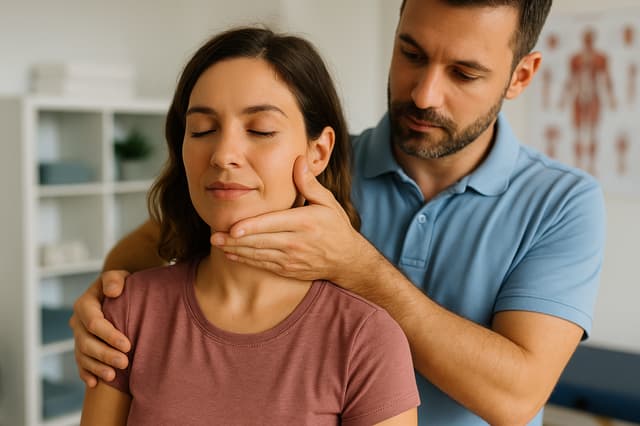
A TMJ assessment should feel precise and calm. Your clinician will ask about pain location, clicking, locking, headaches, dental history, sleep, previous trauma, work habits and what makes symptoms better or worse. The physical exam may include jaw opening, joint sounds, bite-related movement, neck range, shoulder control and palpation of the chewing and neck muscles.
When indicated and with consent, intra-oral assessment or treatment may be used to reach muscles that cannot be assessed well from the outside. This is always explained first, performed with gloves and stopped if it is uncomfortable. If your symptoms suggest dental, medical or imaging review, your physiotherapist should guide you toward the right referral rather than forcing a physiotherapy-only answer.
For a deeper look at hands-on care, see our article on manual therapy for TMJ dysfunction. Manual therapy can be useful, but it works best when paired with movement retraining and daily habit changes.
Exercises Are Usually Gentle
TMJ exercises should not be aggressive. The aim is to restore control, reduce guarding and teach the jaw to move without unnecessary neck tension. A common starting point is a controlled opening drill: tongue resting lightly on the roof of the mouth, jaw opening only as far as it can stay smooth and centered, then closing slowly. The goal is quality, not range.
Chin tuck variations may be used when forward head posture is a clear driver. These are small gliding movements, not forceful neck retractions. Some patients also benefit from breathing drills, shoulder blade control, thoracic mobility and gentle neck strengthening. The right plan depends on what the assessment finds.
Exercises should reduce symptoms over time. They should not cause sharp jaw pain, new locking, strong headache or lasting soreness. If that happens, the dose or exercise choice needs to change.
Desk, Phone And Sleep Habits Matter
For many TMJ patients, the biggest wins come from changing the repeated positions that feed the problem. Raise your screen so your eyes can look forward. Bring the phone up instead of dropping your head down. Rest your elbows when typing if your shoulders are constantly lifted. Take short movement breaks before symptoms build, not only after pain arrives.
Jaw rest position also matters. At rest, the lips can be closed, the teeth should be slightly apart and the tongue can rest gently on the roof of the mouth. This is a simple cue, but it helps many patients notice daytime clenching. A sticky note on the laptop with "teeth apart" can be more useful than another complicated exercise.
Sleep posture is more individual. Some people feel worse after stomach sleeping because the head is rotated and the jaw is compressed. Others flare with a high pillow that keeps the neck flexed. The best pillow is the one that lets your neck relax and keeps symptoms calmer in the morning.
When To Get Help
Book an assessment if jaw pain lasts more than two weeks, if clicking becomes painful, if the jaw locks, if headaches are increasing, or if you are avoiding normal meals because of symptoms. Seek urgent medical or dental advice if pain follows trauma, if there is fever, swelling, unexplained weight loss, neurological symptoms, chest pain, or severe sudden headache.
Most posture-related TMJ pain improves with a clear plan. The plan should explain what is driving your symptoms, what you can do at home, what your clinician will treat in the clinic and how progress will be measured. For patients who need structured care, our TMJ treatment in Dubai service combines jaw assessment, neck care, manual therapy and exercise progression.
If neck symptoms are a major part of your pattern, it may also be worth reviewing our neck pain treatment pathway. The jaw and neck often calm down together when the right driver is addressed.
The Practical Takeaway
Posture does not cause every TMJ problem, and perfect posture is not the goal. The real goal is a jaw that can rest, chew, speak and yawn without constant muscle guarding. That usually requires a combination of local jaw treatment, neck and shoulder control, realistic exercise and better daily habits.
If your jaw pain keeps coming back after short-term relief, ask for an assessment that looks beyond the bite. The answer may be sitting in the way your head, neck and jaw work together throughout the day.
Related care at Physio Cure Dubai
Doctor-led services for what you have just read about.
Frequently Asked Questions
What is the connection between posture and TMJ jaw pain?
Poor posture, particularly "Forward Head Posture," adds significant strain to the neck and upper back muscles. This tension can refer pain directly to the jaw area and alter the jaw's natural resting position, leading to inflammation, muscle spasms, clicking, and pain characteristic of TMJ dysfunction.
What daily habits contribute to the poor posture that causes jaw pain?
Common habits include "Tech Neck" from hunching over computers and phones, poor driving posture like craning the neck forward, stomach sleeping which twists the neck, and carrying heavy bags consistently on one shoulder, which creates an imbalance in the spine.
What are some simple exercises to improve posture for TMJ relief?
Key exercises include Chin Tucks to correct forward head posture by strengthening deep neck flexors, Scapular Squeezes to counteract rounded shoulders by strengthening upper back muscles, and Thoracic Extensions over a foam roller to improve upper back mobility.
How does Physio Cure Dubai diagnose TMJ problems?
Physio Cure Dubai employs a "Root-Cause Diagnosis" approach. A Doctor of Physical Therapy conducts a comprehensive assessment that evaluates not just the jaw, but the entire musculoskeletal system, including postural analysis, range of motion tests for the neck and spine, and muscle strength and flexibility testing to identify the underlying cause of the pain.
Which specialist at Physio Cure Dubai is recommended for TMJ and postural issues?
Dr. Shaimaa Hamdalla, a Senior Physiotherapist at the clinic, is highlighted as a specialist in chronic pain management and postural dysfunctions, making her an expert in addressing the postural root causes of TMJ pain.
What is manual therapy for TMJ?
TMJ manual therapy consists of skilled, hands-on techniques performed by a physiotherapist to relieve pain and improve function. It can include soft tissue mobilization to release muscle tension, myofascial release for connective tissues, joint mobilization to restore movement in the spine, and sometimes intra-oral work to release jaw muscles from inside the mouth.
Does Physio Cure Dubai accept direct insurance billing for treatment?
No, Physio Cure Dubai operates on a "pay upfront" model and does not offer direct billing. Patients must pay for their services in full and then submit the provided invoices and medical documentation to their insurance provider for reimbursement.
What is the correct resting position for the jaw to reduce strain?
The correct resting jaw position is with your lips together but your teeth slightly apart. Your tongue should rest gently on the roof of your mouth, just behind your front teeth. This helps to minimize passive strain on the TMJ.
What makes the treatment at Physio Cure Dubai unique?
Their care model is built on four principles: all treatments are doctor-led by licensed Doctors of Physical Therapy, every treatment plan is 100% personalized, they focus on diagnosing the root cause of the problem, and they use a holistic, evidence-based approach.
Where is Physio Cure Dubai located and when is it open?
Physio Cure Dubai is located at Office 1510, SIT Tower, Dubai Silicon Oasis, Dubai. Its operating hours are from 9:00 AM to 8:00 PM, Friday through Wednesday, and the clinic is closed on Thursdays.
Related Articles

How Jaw Alignment Affects Headaches
Discover how TMJ dysfunction and jaw misalignment trigger chronic headaches. Learn evidence-based physiotherapy for lasting pain relief and better posture.
13 min read

Lifestyle Strategies for Migraine Prevention
Learn how consistent sleep, balanced nutrition, hydration, targeted exercise, and posture correction can slash migraine attacks. Expert physio tips inside.
15 min read
Massage Techniques for TMJ Jaw Pain Relief
TMJ massage offers jaw pain relief. Ease tension, boost mobility, and curb headaches. Follow step-by-step self-care and learn when physiotherapy can help.
14 min read