Doctor-Led Blueprint to Prevent and Relieve Back Pain

Back in Action: A Doctor-Led Blueprint on How to Prevent Back Pain
Back pain is one of the most common reasons people miss work and seek medical treatment. For office workers and active adults alike, it can evolve from a minor annoyance into a debilitating condition that impacts every aspect of daily life. The good news is that the vast majority of back pain is preventable. Understanding the mechanics of your spine and implementing proactive strategies is the key. This guide moves beyond temporary fixes, offering a comprehensive, evidence-based roadmap on how to prevent back pain by focusing on its root causes, from building foundational strength to creating an ergonomic environment that supports your long-term spinal health.
Understanding the Root Cause: Why Your Back Aches
To effectively prevent back pain, we must first understand why it occurs. Your spine is a complex structure of vertebrae, discs, nerves, and muscles, all working in harmony to provide support and flexibility. However, the modern lifestyle—particularly for office workers—places unique and sustained stress on this system. Prolonged sitting, especially with poor posture, can lead to muscle imbalances where some muscles become tight and overworked while others become weak and underused. This imbalance pulls your spine out of its natural alignment, increasing pressure on the intervertebral discs and leading to inflammation and pain.
At Physio Cure Dubai, our core philosophy is centered on root-cause diagnosis. We recognize that back pain is rarely just a localized issue; it's often a symptom of a larger biomechanical problem. Factors like weak core muscles, poor hip mobility, incorrect lifting techniques, or even stress can contribute to spinal strain. Simply treating the symptom (the pain) without addressing the underlying cause is like patching a leak without fixing the pipe—the problem is bound to return. A successful prevention strategy involves a holistic approach that considers your unique body mechanics, lifestyle, and daily habits to build a resilient and pain-free back for the long term.
Building a Resilient Spine: Essential Strength & Mobility Exercises
An active approach is your best defense against back pain. A strong, flexible spine is better equipped to handle the stresses of daily life, from sitting at a desk to lifting groceries. The goal is to build a "natural corset" of muscles around your trunk to stabilize and protect your spine. Incorporating a consistent routine of strength and mobility exercises is non-negotiable for back health. These movements don't need to be complex or require a gym membership; many of the most effective exercises can be done right at home with just your body weight. The key is consistency and proper form.
Here are some fundamental how to prevent back pain exercises that target the key muscles supporting your spine:
- Bird-Dog: Start on your hands and knees. Extend one arm straight forward and the opposite leg straight back, keeping your core tight and your back flat. Hold for a few seconds, then return to the start and switch sides. This enhances core stability without straining the back.
- Glute Bridges: Lie on your back with your knees bent and feet flat on the floor. Squeeze your glutes and lift your hips until your body forms a straight line from your shoulders to your knees. This strengthens the glutes and hamstrings, which are crucial for supporting the lower back.
- Cat-Cow Stretch: On your hands and knees, gently arch your back up toward the ceiling (Cat), then slowly let your belly drop down (Cow). This simple movement improves spinal mobility and relieves tension.
- Plank: Hold a push-up position, keeping your body in a straight line from head to heels. This is an excellent exercise for building deep core endurance. Start with 20-30 second holds.
Key Tip: Consistency is more important than intensity. Aim for 10-15 minutes of targeted back exercises daily rather than one long, strenuous session per week. This builds lasting muscle memory and resilience.
These exercises provide a great starting point for building a stronger back. For more detailed guidance on movements that can help, Harvard Health offers an excellent resource on stretching and strengthening exercises to relieve and prevent lower back pain. However, if you have existing pain, it's crucial to consult a professional to ensure you are performing exercises that are safe and effective for your specific condition.
Mastering Your Environment: Posture and Ergonomics for Pain-Free Living
Even the strongest back can succumb to pain if it’s subjected to poor posture and an unsupportive environment for eight hours a day. Ergonomics is the science of designing your workspace to fit you, not forcing you to fit your workspace. For office workers, this is a critical component of any back pain prevention strategy. Start by assessing your chair. It should support the natural curve of your lower back. If it doesn't, a small rolled-up towel or a lumbar pillow can make a significant difference.
Your monitor should be positioned so that the top of the screen is at or slightly below eye level, preventing you from hunching forward. Your feet should be flat on the floor, with your knees at a 90-degree angle. If they don't reach, use a footrest. These simple adjustments reduce the cumulative strain that leads to chronic aches. Equally important is breaking the habit of static posture. The human body is designed to move.
The "Next Posture" Rule: Your best posture is your next posture. Set a timer for every 30-45 minutes to stand up, stretch, walk to get some water, or simply change your position. This prevents muscle fatigue and keeps your spine healthy.
Beyond the Basics: A Professional Physiotherapy Treatment Plan
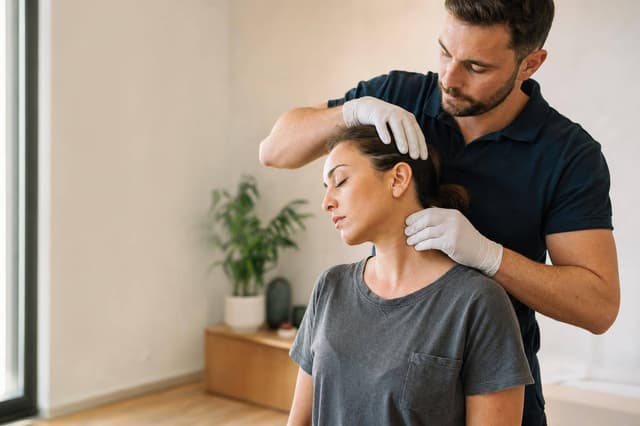
While self-care strategies are powerful, some conditions require expert intervention. A professional physiotherapy treatment plan goes far beyond generic exercises. At Physio Cure, every patient journey begins with a comprehensive assessment led by a licensed Doctor of Physical Therapy, not a technician. This allows us to pinpoint the precise root cause of your pain, whether it's a disc issue, a muscular imbalance, a nerve impingement, or a postural dysfunction.
Based on this diagnosis, we create a 100% personalized care plan. This is where our clinical expertise and advanced technology come into play. Treatment is built on a foundation of manual (hands-on) therapy, where our skilled practitioners use mobilization and manipulation techniques to restore movement and relieve pain. We then integrate advanced modalities tailored to your needs. This might include Dry Needling to release stubborn muscle knots, Cupping Therapy to improve blood flow, or even advanced techniques using specialized equipment like our decompression machine for spinal issues. Our specialists, such as Dr. Mina Gamil in sports injuries and Dr. Shaimaa Hamdalla in Women's Health and postpartum recovery, bring a level of expertise that ensures your treatment is precise, effective, and aligned with the latest evidence-based practices.
Sustainable Wellness: Integrating Long-Term Pain Relief Strategies
True prevention is about integrating healthy habits into your lifestyle for sustainable wellness. Effective long-term pain relief strategies extend beyond the clinic and the office. Pay attention to how you sleep. Sleeping on your side with a pillow between your knees or on your back with a pillow under your knees can help maintain spinal alignment and reduce strain. Ensure your mattress is supportive—if it's over 7-10 years old and sagging, it might be time for a replacement.
Proper lifting technique is also crucial. Always bend at your knees and hips, not your waist. Keep the object close to your body and engage your core muscles as you lift. Hydration and nutrition also play a role; well-hydrated tissues are more pliable and less prone to injury. Finally, manage your stress. Chronic stress leads to muscle tension, particularly in the neck and back. Practices like deep breathing, meditation, or light activity can significantly reduce this tension. The ultimate goal of a physiotherapy plan isn't just to get you out of pain—it's to empower you with the knowledge and tools to prevent it from ever coming back.
Ready to stop managing symptoms and start addressing the root cause of your pain? Our team of doctor-led specialists is here to create your personalized recovery plan. Book a consultation for lasting back pain relief today!
Related care at Physio Cure Dubai
Doctor-led physiotherapy under the medical direction of Dr. Mina Gamil. If anything in this article sounds like you, two of our programs are most relevant:
- Specialty hub: Orthopedic Physiotherapy
- Treatment program: Back Pain Treatment
Related care at Physio Cure Dubai
Doctor-led services for what you have just read about.
Frequently Asked Questions
What is the main cause of back pain for office workers?
The main cause of back pain for office workers is prolonged sitting, especially with poor posture. This leads to muscle imbalances where some muscles become tight and others weaken, pulling the spine out of its natural alignment and increasing pressure on the intervertebral discs.
What are some good exercises to prevent back pain at home?
Four fundamental exercises to prevent back pain are the Bird-Dog for core stability, Glute Bridges to strengthen glutes and hamstrings, the Cat-Cow Stretch for spinal mobility, and Planks for building deep core endurance.
How can I improve my office ergonomics to avoid back pain?
To improve office ergonomics, ensure your chair supports your lower back, position your monitor so the top is at or slightly below eye level, and keep your feet flat on the floor with knees at a 90-degree angle. It's also vital to take regular breaks to stand and move around every 30-45 minutes.
What is Physio Cure Dubai's approach to treating back pain?
Physio Cure Dubai's approach is centered on root-cause diagnosis. All assessments and treatments are doctor-led and focus on identifying the underlying source of the problem. They create 100% personalized care plans that combine holistic, evidence-based practices with manual therapy and advanced technology for lasting relief.
What advanced treatments for back pain are available at Physio Cure Dubai?
Alongside manual (hands-on) therapy, Physio Cure Dubai uses advanced modalities including Dry Needling to release muscle knots, Cupping Therapy to improve blood flow, Acupuncture, and a specialized decompression machine for spinal issues.
Can I use my insurance directly at Physio Cure Dubai?
No, Physio Cure Dubai does not offer direct billing. The clinic operates on a 'pay upfront' model. Patients must pay for services in full and then submit a claim to their insurance company for reimbursement using the invoices and medical documents provided by the clinic.
Who are the physiotherapy specialists at Physio Cure Dubai?
The senior clinical team includes Dr. Mina Gamil (Medical Director), who specializes in sports injuries and complex musculoskeletal disorders; Dr. Shaimaa Hamdalla, specializing in women's health, postpartum recovery, and chronic pain; and Dr. Talaat Abdelhakeem, renowned for pediatric, orthopedic, and spinal rehabilitation.
What is the first step for a new patient at Physio Cure Dubai?
The first step in the patient journey at Physio Cure Dubai is a complimentary initial consultation and assessment, followed by a comprehensive, root-cause diagnosis conducted by a licensed Doctor of Physical Therapy to form the basis of a personalized treatment plan.
How does sleeping position affect back pain?
Sleeping position can significantly affect back pain. To maintain proper spinal alignment, it is recommended to sleep on your side with a pillow between your knees or on your back with a pillow under your knees. A supportive mattress is also crucial.
Where is Physio Cure Dubai located and what are its operating hours?
Physio Cure Dubai is located at Office 1510, SIT Tower, Dubai Silicon Oasis, Dubai. The clinic's operating hours are 9:00 AM to 8:00 PM from Friday to Wednesday, and it is closed on Thursdays.
Related Articles

Strength Training Guide: Armor Up & Prevent Sports Injuries
Learn how evidence-based strength training builds muscular armor, fixes imbalances, and protects your joints. Discover exercises to prevent sports injuries.
15 min read

Assistive Devices in Neurological Rehab: Regain Independence
Discover how doctor-led neurological physiotherapy pairs canes, walkers, AFOs, FES, and smart tech to improve balance, ease fatigue, and restore independence.
15 min read
Whiplash After a Car Accident: When to Seek Medical Assessment
Learn when whiplash symptoms after a car accident need assessment, red flags to watch for, and what a clinical check may involve.
9 min read