How Jaw Alignment Affects Headaches

The Unseen Trigger: A Deep Dive into How Jaw Alignment Affects Headaches
If you've been battling chronic headaches or migraines, you’ve likely explored countless remedies—from medication to lifestyle changes—with limited success. It's a frustrating cycle that can leave you feeling hopeless. But what if the root cause isn't where you've been looking? What if it's hidden in the intricate mechanics of your jaw? The connection between your jaw and head is profound, and understanding how jaw alignment affects headaches is often the first step toward lasting relief. This silent culprit, often related to temporomandibular joint (TMJ) dysfunction, can create a cascade of tension and nerve irritation that manifests as persistent, debilitating head pain.
The Biomechanical Connection: Your Jaw, Neck, and Nerves
To understand the link, we must first appreciate the complex anatomy of your head and neck. Your jaw, or mandible, connects to your skull at the temporomandibular joints (TMJ), located just in front of your ears. These joints are surrounded by a powerful network of muscles responsible for chewing, talking, and yawning. When your jaw is misaligned—due to issues like an uneven bite (malocclusion), teeth grinding (bruxism), or injury—these muscles are forced into a state of constant, low-grade tension.
This strain doesn't stay isolated. The muscles of the jaw are intricately connected to the muscles in your neck, shoulders, and upper back. A misaligned jaw can pull on these muscles, leading to a chain reaction of stiffness and pain. Furthermore, this area is rich with nerves, most notably the trigeminal nerve. This crucial nerve is responsible for sensation in your face and motor functions like biting and chewing. When the TMJ is dysfunctional, it can irritate the trigeminal nerve, which then sends pain signals to different parts of your head, mimicking tension headaches or even migraines. This referred pain is why you might feel a throbbing pain in your temples or behind your eyes when the actual problem is in your jaw joint.
Identifying the Signs: Headache Patterns Linked to Jaw Misalignment
Headaches originating from jaw issues often have distinct characteristics that set them apart from other types. While a definitive diagnosis requires a professional assessment, you may recognize some of these tell-tale signs. Being aware of these patterns is a crucial step toward seeking the right kind of how jaw alignment affects headaches relief. Do any of the following symptoms sound familiar?
- Morning Headaches: Waking up with a dull, aching headache, especially in the temples, can be a sign of nighttime teeth grinding or clenching caused by jaw misalignment.
- Pain with Jaw Movement: Does your headache worsen when you chew, talk for extended periods, or yawn widely? This is a strong indicator that the muscles around your TMJ are the source of the pain.
- Associated Jaw Symptoms: The headaches are often accompanied by other TMJ-related symptoms, such as a clicking or popping sound in the jaw, ear pain or a feeling of fullness in the ears, and facial tenderness.
- Location of Pain: The pain is frequently felt in the temples, behind the eyes, at the base of the skull, or even radiating down into the neck and shoulders.
- Unresponsive to Standard Treatments: If typical headache medications and therapies provide little to no relief, it's a strong clue that the underlying cause is mechanical and needs a different approach.
Key Tip: Pay close attention to your posture. A forward head position, common in our screen-focused world, places immense strain on your neck and jaw muscles, exacerbating the effects of even a minor misalignment. Try to keep your ears aligned over your shoulders throughout the day.
The Postural Domino Effect: Jaw & Cervical Alignment
The relationship between your jaw and neck is a two-way street. A misaligned jaw can lead to poor neck posture, and conversely, poor posture can worsen jaw problems. Imagine your head as a bowling ball balanced atop your spine. When you jut your head forward to look at a computer screen or phone, the muscles in your neck and upper back have to work overtime to hold it up. This forward head posture forces your lower jaw to shift, altering your bite and putting stress on the TMJ.
Over time, this creates a vicious cycle. The strained neck muscles contribute to tension headaches, while the compromised jaw position adds another layer of TMJ-related pain. As detailed in expert resources, the connection is so strong that treating one area without addressing the other is often ineffective. For more on this, you can explore how TMJ, neck pain, and headaches are connected. Effective treatment must therefore consider both the jaw & cervical alignment as a single, integrated system. This is where specialized physiotherapy shines, employing specific neck and posture techniques to break the cycle of pain.
A Doctor-Led Path to Relief: Physiotherapy for Headaches
If you suspect your headaches are linked to jaw issues, seeking professional help is critical. At a premier clinic like Physio Cure Dubai, the approach is fundamentally different from temporary pain management. The core philosophy is "Doctor-Led Treatment," meaning your entire journey—from assessment to hands-on therapy—is managed by a highly qualified practitioner with a Doctor of Physical Therapy (DPT) degree. This ensures a deep, accurate diagnosis that looks beyond the symptoms to find the root cause.
The goal of physiotherapy for headaches in this context is to restore normal function to the TMJ and surrounding structures. This isn't about a "quick fix" but a comprehensive, personalized recovery plan. Your therapist will conduct a thorough evaluation, assessing your jaw movement, muscle tension, neck mobility, and overall posture. Based on this, a multi-faceted treatment plan is created, which may include:
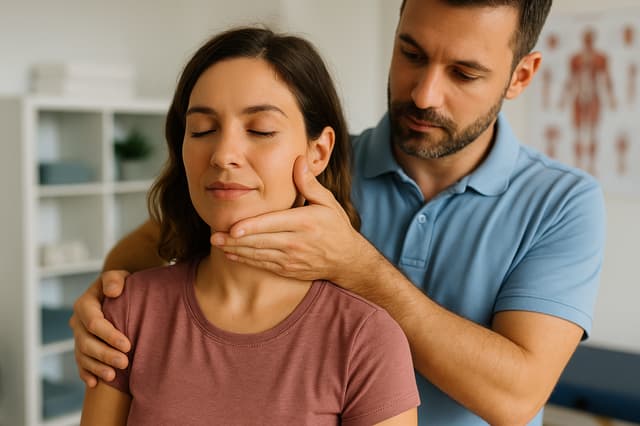
- Manual (Hands-On) Therapy: This is the cornerstone of treatment. Your physiotherapist will use skilled techniques to gently mobilize the jaw joint, release tight facial and neck muscles, and improve cervical spine alignment.
- Dry Needling or Acupuncture: These advanced modalities can be incredibly effective for releasing deep trigger points in the jaw, neck, and shoulder muscles that refer pain to the head.
- Postural Re-education: You'll learn specific neck and posture techniques and targeted exercises to correct forward head posture and strengthen the muscles that support a neutral spine, reducing strain on your jaw. For chronic postural issues contributing to back and neck strain, specialized back pain treatments can also be integrated.
- Patient Education: A vital component is learning how to manage your condition. This includes advice on ergonomics, stress management techniques to reduce clenching, and gentle self-mobilization exercises to perform at home.
At Physio Cure Dubai, we believe in 100% Personalized Care. Your treatment plan is never a template; it's a bespoke strategy designed around your unique condition, lifestyle, and recovery goals. Lasting relief comes from a plan as individual as you are.
A Holistic & Evidence-Based Approach to Wellness
True healing involves more than just treating the site of pain. A holistic approach considers all contributing factors, from biomechanics to lifestyle. For instance, the expert team at Physio Cure Dubai, including specialists like Dr. Shaimaa Hamdalla, understands how conditions like postpartum recovery can influence posture and lead to headaches, offering dedicated Women's Health physiotherapy. Similarly, practitioners like Dr. Mina Gamil and Dr. Talaat Abdelhakeem bring a wealth of experience in complex musculoskeletal and neurological disorders, ensuring that even the most stubborn cases are met with innovative, evidence-based solutions.
This patient-centered model focuses on empowering you. The goal is not just to alleviate your current headaches but to provide you with the knowledge and tools to prevent their recurrence. By addressing the root cause—the jaw misalignment and its postural consequences—you can finally break free from the cycle of chronic pain and return to the activities you love without fear of another headache lurking around the corner.
Stop letting headaches control your life. If you're ready to uncover the true source of your pain and start on a path to lasting relief, it's time for a professional assessment. Discover how our doctor-led physiotherapy can address your jaw alignment and help you achieve a pain-free future today.
Related care at Physio Cure Dubai
Doctor-led physiotherapy under the medical direction of Dr. Mina Gamil. If anything in this article sounds like you, two of our programs are most relevant:
- Specialty hub: Orthopedic Physiotherapy
- Treatment program: TMJ and Jaw Pain Therapy
Related care at Physio Cure Dubai
Doctor-led services for what you have just read about.
Frequently Asked Questions
How can my jaw cause headaches?
When your jaw is misaligned, it creates constant tension in the surrounding muscles of the jaw, neck, and shoulders. This tension can irritate major nerves, like the trigeminal nerve, which then sends pain signals to your head, manifesting as tension headaches or even migraines.
What are the signs that my headaches are related to my jaw?
Common signs include waking with a dull headache in the temples, pain that worsens when you chew or talk, and headaches accompanied by jaw clicking or popping sounds. The pain is often felt in the temples, behind the eyes, or at the base of the skull and may not improve with standard headache medication.
Can poor posture cause headaches?
Yes, poor posture, particularly a forward head position from looking at screens, puts excessive strain on neck and upper back muscles. This can alter your jaw's position, stressing the temporomandibular joint (TMJ) and contributing to a cycle of muscle tension that leads to headaches.
How does physiotherapy help with jaw-related headaches?
Physiotherapy addresses the root mechanical cause of the pain. A therapist uses manual (hands-on) techniques to mobilize the jaw joint and release tight muscles, advanced modalities like dry needling to target trigger points, and postural re-education to correct alignment and prevent recurrence.
What is the treatment philosophy at Physio Cure Dubai for headaches?
Physio Cure Dubai's approach is doctor-led, meaning a licensed Doctor of Physical Therapy performs the assessment and treatment. Their philosophy is to find and treat the root cause of the problem through a 100% personalized care plan, rather than just managing symptoms, to achieve lasting relief.
What specific treatment methods does Physio Cure Dubai use for jaw and neck-related pain?
The clinic's primary treatment is manual (hands-on) therapy to restore proper joint and muscle function. This is often combined with advanced modalities like Dry Needling, Acupuncture, and Cupping Therapy, as well as personalized exercises for postural correction.
Who are the specialists at Physio Cure Dubai that treat conditions like chronic headaches and postural dysfunction?
The senior clinical team includes Dr. Mina Gamil, who specializes in complex musculoskeletal disorders; Dr. Shaimaa Hamdalla, who focuses on chronic pain management and postural dysfunctions; and Dr. Talaat Abdelhakeem, an expert in orthopedic and spinal rehabilitation.
Does Physio Cure Dubai accept direct insurance billing?
No, Physio Cure Dubai operates on a 'pay upfront' basis and does not offer direct billing. Patients must pay for their services in full at the clinic and will be provided with all the necessary invoices and medical documents to submit a claim to their insurance company for reimbursement.
How can I manage the cost of treatment at Physio Cure Dubai?
To improve financial accessibility, the clinic accepts Tabby, which allows patients to pay for their treatment in several interest-free installments. They also offer a 25% discount for Fazaa members and provide offers for Alsaada cardholders.
Where is Physio Cure Dubai located and what are its hours?
Physio Cure Dubai is located at Office 1510, SIT Tower, in Dubai Silicon Oasis. Its operating hours are from 9:00 AM to 8:00 PM, Friday through Wednesday. The clinic is closed on Thursdays.
Related Articles

Diet & Nutrition Tips for Fibromyalgia Patients
Discover anti-inflammatory foods, trigger pitfalls, and holistic strategies to ease fibromyalgia pain, fatigue, and brain fog. Start eating for relief today.
11 min read

How Posture Affects TMJ Jaw Pain
Forward head posture can load the jaw, neck and chewing muscles. Learn how doctor-led TMJ physiotherapy assesses posture and treats jaw pain safely.
8 min read
Massage Techniques for TMJ Jaw Pain Relief
TMJ massage offers jaw pain relief. Ease tension, boost mobility, and curb headaches. Follow step-by-step self-care and learn when physiotherapy can help.
14 min read